
Lately I’ve been pondering the notes I have for Chapter 3 of my current work-in-progress, and I think I’ve had an interesting insight. In this blog, I usually write about “societal meta-narratives,” the background “stories” (really just story-like frameworks) for how we think about the groups we’re in. The protagonist, or point-of-view “character,” for these sort-of-stories isn’t individuals, it’s the group itself. That is, it’s Americans, or the Cherokee Nation, or the Ukrainian people, or Mother Russia.
And more than that, it matters that the people in the group are thinking about themselves as a group, not as members of a category that the group happens to comprise. This is an important distinction. Left-handed people are a category, not a group. Asian Americans are mostly a category, not a group. Women are mostly a category, although sometimes they (we) have the sense of ourselves as a group. For a long time, being gay meant you were a member of a category, and you would typically want to keep that category membership hidden – it wasn’t until activists organized LGBTQ people into a group that they could achieve civil rights. Clarence Thomas is a Black American who doesn’t seem to prioritize his membership in that category and probably doesn’t find much personal value in its status as a group.
This group-ness I’m talking about is referred to in academia as “entitativity” – which is kind of a quirky word. It refers to being an “entity,” but it’s also got the “-ta-“ part like “preventative” and “orientation” do, so even though it may be tempting to say “entitivity,” that’s wrong. Entitativity.
Humanity, as a group, also has its meta-narratives. They mostly fall into two categories – religious meta-narratives about the origins of humanity or our collective destiny, and environmental ones about our place as members of the Planet Earth ecosystem. But in these meta-narratives, do we see ourselves as individual humans or as members of a group?
The Christian meta-narrative tells what will happen to humanity in the long term, but the Christian message is very much addressed to individuals. We can each decide for ourselves whether to accept what Christianity offers. And there’s a natural reason that the Christian message is addressed to individuals – when Jesus was preaching to his fellow Jews, they were subjects of the Roman Empire, and it was extremely dangerous for Jews to consider themselves a group, even in their own homeland. They only dared act as individuals – and only in regard to their own private lives and personal thoughts, not politically.
The environmental movement has also had its moments of appeal to individuals. Somewhere I have a copy of a book about “50 simple things you can do to save the planet” – and of course, we can each make choices to minimize our carbon footprints. But it’s a lot easier to do that when our larger systems are supporting us, and at least to get past the start-up stage, larger systems are most effective when groups get involved. Back in the late 1980s, I worked for a very cool little consulting firm that collaborated extensively with the Electric Power Research Institute, especially in its efforts to make electric vehicles a feasible option. It took lots of funding to move past the old lead-acid batteries to the lithium-ion batteries often found in today’s electric cars and hybrids. For funding like that, groups have to be involved, whether that’s governments or foundations making grants or businesses making investments.
But do humans like thinking of themselves as members of a giant group that encompasses all of us? Ronald Reagan once said, in a speech to the United Nations, “I occasionally think how quickly our differences worldwide would vanish if we were facing an alien threat from outside this world.” He’s probably right, although my years of research on the “democidal mindset” tell me that we’d very quickly start blaming each other as possible collaborators while looking around for infiltrators.
The thing is, many of us – especially in the West – value ourselves as individuals first, and we may tend to be suspicious of groups, except the ones we deliberately choose to join, and (if we’re lucky) our families. Groups can repress our individuality and take away our freedom. Our childhood playground experiences tell us that – we might get bullied if we’re too different. Our history tells us that – Stalin’s ideas of how to do socialism made life in the Soviet Union a nightmare for many. So we’re often skeptical about groups.
Another complication is that it’s easy to stop thinking like a group and start pointing fingers. It’s all very well to say that “humanity” created the climate crisis, but someone in a developing nation could reasonably point out that I spent years driving one car, and then another, with very poor gas mileage. I’ve made choices that contributed more to our collective problem than they have. They have a legitimate grievance against the American lifestyle, and they may not appreciate being lumped in with the “humanity” who caused the problem.
So… we need an idea of humanity being a group that feels fair to everyone, and that values individuality rather than smothering it right out of us.
This is a topic that Rebecca Solnit often writes about. She contrasts what others have called “atomism,” an Enlightenment idea of us each as essentially separate, with “interdependence,” where we each have a role to play through connection with each other. Ironically, most atoms aren’t even as solitary and self-contained as the metaphor suggests; the vast majority bond with others to form molecules. Nevertheless, some places, like the United States, tend to valorize this idea that we’re each self-contained and self-sufficient.
In a recent blog post, Solnit describes an “ideology of isolation,” a “sad and lonely” worldview that can even “divorce cause and effect,” since biology teaches us that we’re inevitably interconnected. Rather than experiencing this connection, its followers “often seem miserable, angry, and eager to punish and harm.” There may be momentary satisfaction in striking out, but that’s no way to live a life.
Anyway, back to meta-narratives. Just like regular stories, meta-narratives tend to have a main character (our group) dealing with some problem over time and hoping for a happy outcome. The tricky bit is that in environmental meta-narratives, our group (humanity) is both the protagonist and the antagonist – we’re collectively dealing with problems created by other humans, in the past and in the present. So that was my question for this week. Or rather, my insight for the week is that we need some good examples of this – actual stories that can model useful ways to think – that can encourage us to have better group-stories (meta-narratives) for the future.
In Greek tragedies, the protagonist is also the antagonist, because all the great things they achieve end up lost due to their tragic flaw. But obviously, we don’t want the story of humanity to be a tragedy. How can we be both protagonist and antagonist and come out okay?
I started by thinking about the Jungian Shadow. Jung taught that each of us has a problematic side, a Shadow, that we normally hide away. We don’t identify with it. Jungian therapy can involve accepting that we have a dark side and making peace with it. Instead of a tragedy, the protagonist recognizes their flaws and moves forward anyway, perhaps chastened, but ready to make things right. Thinking about this storyline might help us with our group “story.”
The main example that came to mind for me was from Ursula Le Guin, who so often thought about these things first. In A Wizard of Earthsea, young Ged releases a creature while studying at wizard school and has to travel the lands to overcome the creature… which turns out to be his own Shadow, or in the language of Greek tragedy, his hubris. We’d like to think that the environmental movement has already had some success in teaching us that we can’t control Nature the way we once hoped we could – and that our efforts to do so have caused a whole cascade of problems. A Wizard of Earthsea is very much about an individual on his own, though, and doesn’t really help us with the group aspect of our own story.
I’m going to go off on a tangent for a moment. There’s a whole genre of story in which a tragedy nearly happens but is averted at the very end, the eucatastrophe. One example could be the Shakespeare play, A Winter’s Tale, in which the king makes lots of Very Bad Choices but gets to be happy at the end anyway, but that’s only because (a) he repented, (b) he got lucky, and (c) everyone seems to forget that his son died along the way. Another example of a story that felt tragic all along but then turned out okay was the 1986 movie Belizaire the Cajun, but I don’t remember the details, and apparently it’s so obscure now that nobody’s even bothered to post its plot to Wikipedia.
Probably the most famous eucatastrophe was written by the man who invented the term, J.R.R. Tolkien. Spoilers for Lord of the Rings: Frodo fails, but he was kind to Gollum, so Gollum is there at the end, bites off Frodo’s Ring-wearing finger, falls into the lava while doing so, and solves the problem.
Eucatastrophe doesn’t work well in meta-narratives. The most obvious example is that, despite the “Vanishing Indian” storyline so prevalent throughout U.S. history, our Native people are still here – but we still have far to go before they can be confident that we consider them a valued and active part of the American story. In other words, living through a eucatastrophe means you were vulnerable, and you probably still are.
A partisan eucatastrophe is even more questionable. Suppose the 2016 Electoral College had chosen Hillary Clinton – there was some talk of it at the time. The Democrats might have felt an immense sense of relief. Crisis averted! No. One side’s “oh thank God” would feel very, very Wrong to the others. (If Trump and his fans don’t want to admit that he didn’t win in 2020, imagine if his actual 2016 win had been negated like that.)
Also, in a eucatastrophe, the potential tragedy usually isn’t created by the people who need to resolve the problem. We need to get back to that “protagonist and antagonist at the same time” question.
(My husband was an example of that while I was writing this. He’d finished slicing some avocado for lunch, and he simultaneously tried to throw the peel into the trash and push the trash can to its normal spot, using his foot. As he put it, “Hilarity ensued.”)
But then he did come up with a good example for me – everyone’s favorite Victorian-era social justice warrior, Charles Dickens, and his perennially popular story, A Christmas Carol. As you probably already know, Ebenezer Scrooge is a bad-tempered miser who’s mean to his one employee, Bob Cratchit, even on Christmas Eve. When he goes to bed that night, though, he’s visited by four ghosts.
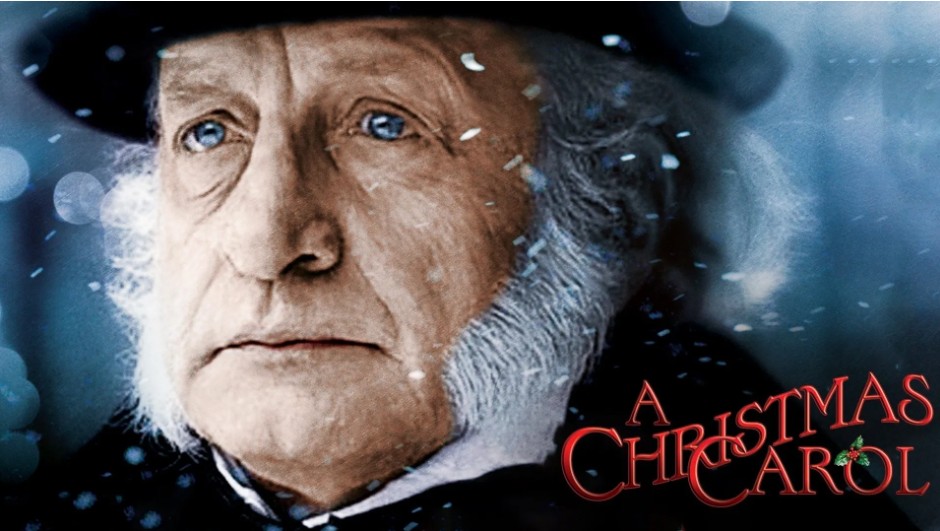
First, his late business partner shows up in chains, urging him to repent before it’s too late. Bah, humbug. Next, the Ghost of Christmas Past appears and takes him back in time to see the child and man he once was. He’d been a painfully lonely child but his own first boss had been great fun; we see young Scrooge celebrating at Mr. Fezziwig’s Christmas party. Fezziwig is himself a capitalist, but as a small business owner he can optimize for multiple values, including employee well-being, rather than having to go all in on maximizing profits. Scrooge had been happy then, but as his interest shifted from love to money, his fiancée broke off their engagement. So from this ghost, we learn that Scrooge’s personality was once well-rounded, but he chose poorly.
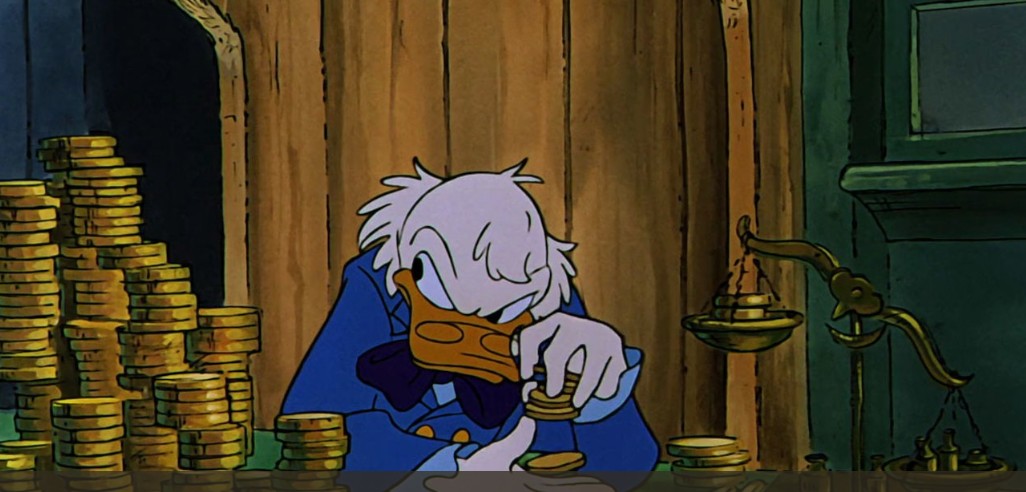
Finally, the Ghost of Christmas Future shows us that not only has that Cratchit child died… but Scrooge himself is dead and nobody cared. Scrooge is filled with terror, then awakens in a great relief to learn that all these visitations happened in a single night, and he still has time to put things right. Henceforth he’ll take excellent care of the Cratchits, spend loving time with his own family, and give generously to other people in need.
The point is not that we need our billionaires to save us. Rather, it’s that Scrooge learns to value his interconnectedness. He’s still himself, but a much kinder and happier version. He learns in three ways. First, he remembers the value of friends and play, reawakening the joyful and sociable parts of himself. Second, he experiences empathy, seeing what the lives of others are like. And third, he is struck by existential terror, realizing that the real meaning of life comes from our connection with others, and that he wants to be remembered fondly when he’s gone (because he’s been good to people, not because he’s *ahem* plastered his name everywhere).
The overall message of A Christmas Carol is that interconnectedness is vitally important. Whichever meta-narratives we choose to promote, let’s make the “we” of our stories as inclusive as possible, reminding those still stuck in “atomism” that connection has merit.
(Also, it tells us that capitalism can be okay if what we mean by that is supporting small businesses, not valuing profits over people.)
And while we’re on the theme of connection, Happy Valentine’s Day.

 The Meta-Narrator