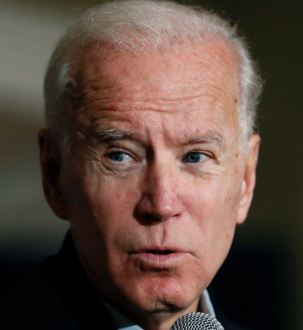
More Slogan Science: Joseph R. Biden, Jr.

In my last blog post, I took a close look at Trump’s campaign messaging, both for 2016 and 2020. Now it’s Joe Biden’s turn. What stories-about-us is he using to support his campaign and energize the voting public?

Before we look at Biden’s slogans, I want to be clear about what I mean when I talk about the group “stories” underlying political campaigns. I mean something very simple and basic. Is the gist of their message, “We can make some improvements”? That’s a Progress story. Is it, “We’ve made it, we’re the best!”? That’s a Triumph. Are they saying, “We shouldn’t rock the boat”? That’s Stability. Or, “We need to overhaul everything, and fast!” Probably that’s a Transformation. The rest is details.

In general, the story underlying the candidate’s campaign is:
1. A vision for the group they’re addressing, and
2. A direction for that vision: up, down, backwards, or steady as we go.
3. Details, like who to credit or blame for our circumstances, or some vivid imagery to capture our imaginations, or at least an evocative word or two, to jazz things up.

That seems obvious, doesn’t it? And yet Hillary Clinton failed that simple test. Certainly her campaign had a storyline — she was suggesting improvements. That means Progress, along with the Stability to make the improvements work through a democratic process (as compared with, say, dictatorial fiat). Remember, Republicans usually want improvements (and Progress) too, although they’re often choosing different goals than the Democrats. Progress is a very conventional, very American story. And with a two-party system, the party in power typically wants to keep making their kind of progress, while the other party usually wants a course correction, to get “back on track” toward their own version of progress — the goals and ideals they were working toward the last time they were in office.

But Clinton’s slogans didn’t do the expected — getting us excited about the vision underlying her extensive collection of policy plans. Her campaign slogans weren’t about our group at all. Instead, they were about individuals. “I’m With Her” — that’s the story of one American, ideally repeated many times over, but still, just one. “Stronger Together” is closer, but it’s still about individuals — the more individuals together, the stronger they are. (And stronger for what? Were we planning a war, or something?) There’s  a list online of all 84 of the messages they considered, and not one of them is about America as a group. (“It’s about you.” Seriously?)

biden_imageLet’s see what Biden’s team is doing. If you go to the official Biden website, you’re greeted with “Our Best Days Still Lie Ahead.” Already, he’s far beyond Clinton: “Our” says it’s about us, “Ahead” gives us a direction (forward, of course), and “Best Days” is a fine vision, an ideal. I like the “Still” too, since it reminds us that we’ve had great collective times in the past. And if we elect Biden, he says, we’ll be even better than that! On the other hand, it’s the kind of thing an older person says to another older person to reassure them, with echoes of a 1964 Sinatra song. I’m not sure they’ve thought all of this through.

Biden’s Vision link takes us to a big grid of “Bold Ideas.” Some of these have inspiring titles, like “Lift Every Voice.” Some fall flat, like “The Biden Plan to Scale Up Employment Insurance by Reforming Short-Time Compensation Programs.” Others are inadvertently awkward, like “Joe Biden’s Agenda for Women.” (I don’t want him setting my agenda, how about you?) It’s important to be able to find his policies, but the page would be stronger if he reiterated and further developed that “Best Days” theme.

Wikipedia lists five other slogans for the Biden campaign. Let’s take them in reverse order.

“No Malarkey” is a slogan that’s trying to attest to Biden’s character, not his vision for the country, and that’s fine, as far as it goes. Not every campaign slogan needs to be about a vision for the country. Personality and character count too. As a Vox analysis explains, this slogan speaks to Biden’s authenticity but also reminds voters that he’s not afraid to come across as uncool. A mixed bag.

“We Are America, Second to None” is a phrase he used at the 2016 Democratic National Convention. Yes, it’s about us, and yes, you can rouse emotion by telling us we’re great, but there’s no direction — nothing for us to do with that emotion besides cheer.

“This Is America” was a line from one of the 2019 Democratic debates, where Biden tells Trump America is strong because of its diversity and not in spite of it. Here we have part of a story-of us: He’s defining “us.” He doesn’t go on to say where we’re headed, though, and without the explanation that follows, the phrase “This is America” is a dud. I doubt it’s seriously been considered as a free-standing campaign slogan.

“Restore the Soul of America”… bingo. Biden uses this phrase in an opinion column that was published in several regional newspapers, like the Des Moines Register. His point is that the Trump presidency has damaged our national character and that we need to restore it through policies that reflect our common values, like a strong middle class, health care for all, safe schools, and basic human dignity, along with “the defining American promise — that no matter where you start in life, there’s nothing you can’t achieve.” He’d previously used the phrase in an op-ed on Religion News Service, where he relates it to his Catholic faith and how it’s sustained him during times of great personal loss.

With this slogan, Biden finally uses the Course Correction message we’d expect from the party out of power, but he also does something else. The word “soul” has religious overtones and meaning, of course, but it also resonates well with secular Americans. Soul mate, soul searching, soul food. It’s a simpler word than “character,” and it’s also more powerful.

The most effective political messages have a bit of magical sparkle to them. They’re more vivid. They use evocative language that goes beyond the ordinary — but they’re subtle about it, so they don’t trigger a skeptical backlash by seeming extreme or emotionally wrought.

One of the most effective and memorable campaign commercials in my lifetime was very successful in doing this: Reagan’s 1984 re-election ad, “It’s Morning Again in America.” The commercial documents economic gains in the previous four years, relating them to ordinary people’s lives — heading to work, moving into a new home, getting married. It ends with, “Why would we ever want to return to where we were, less than four short years ago?”

The genius of this ad, and this slogan, is that Reagan isn’t making any new promises, for further Republican-flavored Progress. Instead, he’s fusing together two genres, the Course Correction typical of a party out of office, and the Triumph — he’s already done it. And the simple, vivid, word “morning” evokes sunshine and fresh beginnings without any melodrama.

If the Biden campaign is as smart as Reagan’s, they’ll recognize what they’ve got in “Restoring the Soul of America” and run with it.

Photo source: AP, Charlie Neibergall.

Posted in US politics | Tagged , , | 2 Comments

The Science of Slogans, with Donald J. Trump

In 2016, Donald Trump masterfully wielded campaign slogans from at least four different emotional “genres,” each telling or implying a different story about who we are and where we’re headed. Can he repeat this performance in 2020? Will a sizeable share of the voting public find him as inspiring this time as they did before he took office?

Stories matter. Every political candidate – indeed, every social movement and every institution – has at its core a collective story about the group it hopes to serve and inspire. Of course, our emotional reactions to the candidates include our feelings about their personalities and characters, and our impressions of what we know of them physically (their looks, their voice, their mannerisms). But alongside these responses to who we think they are, we are also very much interested in who they think we are – and who we could be, under their leadership. And their “stories about us,” their “meta-narratives,” are a critical part of their efforts to get us excited about voting for them.

If you’ve read my blog before, you’ll know that I researched these meta-narratives extensively in grad school, and I’ve shared what I learned in my earlier posts. In fact, I’ve been studying the psychology of these stories-about-us since the 1980s, hoping to understand how they work and how recognizing their effects can make us better citizens. I’m writing a book about it now, actually, and I hope to be able to share it with you in the next year or so.

But today I’d like to stop and look at Donald Trump. Everyone knows MAGA, “Make America Great Again.” We know that it didn’t originate with Trump – Reagan used the slogan, and Bill Clinton briefly did too – but Trump made it his own. (Literally – he trademarked it!) MAGA belongs to the Restoration genre of meta-narratives. Simply put, we used to be great, apparently we aren’t now, but if we elect this guy as president, we will be again. The story can be jazzed up with looming threats, like terrorism and unchecked immigration, bringing us to a dramatic crossroads between success and disaster, and Trump did that too. And by being so vague about what makes us not-so-great in the present, he let the voting public fill in the blanks for themselves. Maybe it was all those high-paying manufacturing jobs going overseas, leaving working-class communities unemployed and vulnerable. Maybe it was having a black president. Maybe it was losing our superpower status, which must have happened if any random group of terrorists can bring us to panic. Whatever your diagnosis, Trump implied he’d be able to fix it.

But there was more. Trump also had plans to renovate our infrastructure, which is a Progress story. Moderate Democrats and Republicans both like Progress, the process of making incremental improvements toward our collective goals. The parties have often differed on defining those goals, but they both believe in setting them and using due process to steer us toward meeting them. Improving our national infrastructure definitely qualifies as Progress.

Trump also offered a few Transformation storylines, implied by “Drain the Swamp” and “Lock Her Up!.” A Transformation is an exciting jump, a “great leap forward,” where we envision some better future and dedicate ourselves to getting there, even if we don’t know precisely what steps we’ll need. In a way, it’s the opposite of the steady-gains, business-as-usual Stability that usually underlies Progress. “Drain the Swamp” is obviously opposed to business-as-usual, and “Lock Her Up!” also suggests sidestepping due process. (Some of Bernie Sanders’ fans think in these terms, too, if they envision that electing Sanders would somehow let us dispense with the tiresome political give-and-take that usually characterizes change. Of course, many Sanders fans simply hoped to have a fresh, improved agenda while still expecting he’d need to use the usual methods to realize their goals.)

Finally, Trump didn’t run as a third-party candidate; he chose to compete as a Republican. By giving him their nomination, the GOP leadership granted Trump a Stability storyline, telling the voting public he’s okay, he’s one of us. With that affirmation, anyone loyal to the party would be seriously encouraged to vote for Trump regardless of whatever concerns they had about him.

So, Trump used four stories: Restoration, Progress, Transformation, and Stability. Each has its own emotional impact. Stability is reassuring, of course, and satisfying, while Transformation is thrilling – or unsettling, depending on your perspective. (Many conservatives were so jarred by the Transformation of seeing a black man in the White House that they even questioned his citizenship and religion.) Progress is gratifying and affirms our hope.

Restoration is a compound story, full of elements that sometimes appear on their own, and each of those elements has its own emotions. We can be proud of the idealized past that we’d like to return to, and unhappy that things are no longer as wonderful as they once were. Depending on the reasons for our collective fall, we might feel guilty or ashamed, if it was our own group’s fault, or angry if another group is to blame. We feel anxious, stressed, or maybe even outraged about the crossroads at which we find ourselves, and thrilled and grateful that we can hope for a brighter outcome.

Finally, every one of these stories seeks to give us a way to understand our present circumstances. They let us put a name to our problems, and they can even give meaning to whatever sacrifices we might be asked to make. I’m not certain if there’s a specific emotion that goes with having the world make more sense, but surely it leads to greater confidence and contentment.

Of course, no voter has to like all of these stories. But if any part of what Trump said resonated with someone, hit the right emotional chord, that person would be more likely to vote for him than they would have otherwise.

So, can Trump repeat his narrative performance in 2020?

First of all, his original storylines about Restoration, Progress, and Transformation can’t be repeated just as they were. Presumably he’s had three years to make America “great,” repair our roads and bridges, “drain the swamp” of Washington corruption, and imprison Hillary Clinton, so if he repeated his plans to do those things, he wouldn’t have a lot of credibility. And although he never campaigned explicitly for the Stability message, any Republican who puts their party affiliation over their own lived experience of stability (or lack thereof) will probably still give him their vote. Meanwhile, here’s his opportunity to sell us a new story about ourselves. What’s he offering?

As soon as he took office, Trump announced his re-election slogan, “Keep America Great.” Consistent with Trump’s relative gift with meta-narratives (compared with, ahem, Hillary Clinton), the Triumph genre could make good sense. Any time we think we’ve collectively achieved something, we value that closure. On the other hand, the way a Triumph usually works is that it’s something we want to take for granted, not something we have to work not to lose. If Trump tells us we still have to do something to retain our greatness, it could backfire on him.

(You’ll notice, of course, that I’m not even addressing whether today’s supposed greatness is objectively so – stories don’t work that way. They can help us make sense of our experiences, like Trump’s earlier assertion that America was no longer “great,” but once we’ve accepted a story as meaningful, contrary facts are often just ignored – unless, of course, they’re key to an even more meaningful story that reflects how times have changed.)

However, it sounds like Trump’s changed his mind anyway. Now his campaign slogan is… “Transition to Greatness.” I assume that what he’s telling us is that the MAGA process is taking longer than he expected, and he’s going to need some more time to get us there. But this slogan has a few problems. First, it doesn’t mention America or Americans at all; we’re just supposed to assume that’s what he’s talking about. Second, the word “transition” is not exactly slogan-worthy. It’s ten letters long and sounds like corporate-speak; it doesn’t have the nice Anglo-Saxon ring of “make” or even “keep.” Third, there’s no call to action, nothing for the voter to do – just sit back and enjoy the ride? Fourth, of course, he’s admitting that the “greatness” hasn’t happened yet, and it isn’t all that clear which emotions he’s trying for. I’m assuming Trump is telling us that we’re still on the upswing part of the originally promised Restoration, but structurally it’s pretty weak.

And finally, anyone with any familiarity with presidential elections will know that in this context, the word “transition” is used to describe the period when the incumbent leaves office and their heir or rival takes over. In other words, if we’re making a transition, that means Trump has lost the election. The “Greatness” would refer to Joe Biden, the presumptive Democratic nominee. Can’t you just picture the Biden staff laughing behind the scenes over Trump’s accidental endorsement of their candidate?

There’s still plenty of time for Trump to add some more effective slogans; the election’s still five months away. Next time we’ll see what Biden’s come up with.

Posted in US politics | Tagged , , | 11 Comments

The Warren Paradox

Elizabeth Warren’s March 5 announcement that she was suspending her presidential campaign was certainly sensible, however disappointing it may have been to many in my own demographic, “highly educated middle-aged white women.” Throughout her campaign, she was usually labeled a “progressive” or even “radical,” along with Bernie Sanders, and in contrast to the more “moderate” candidates such as Joe Biden, Pete Buttigieg, and Amy Klobuchar. After her departure, the “progressive” mantle was left to Sanders, who has now also dropped from the campaign and recently firmly endorsed Biden’s candidacy — the two have announced a series of task forces to ensure that both progressives and moderates will have a voice in policy development.

Many have analyzed the failures of the Warren campaign. I’m not going to join in the policy post mortem. Rather, I want to take a look at her storyline, which was somewhat unconventional, and illustrates an important facet of voter psychology.

It’s very common to think that voters are, or should be, rational actors — people who understand the pros and cons of different policies as they would affect themselves and others, and who make decisions accordingly. Policy analysis is important, but political scientists have found that it doesn’t play as big a role in voting as one might think. Perhaps the most important factor in voting is the intuitions the voters have about the candidates: how they feel about them. These feelings can certainly be influenced by whether they think a candidate would be able to bring about policies they like, but policies don’t have to be part of the picture at all. Another factor that’s probably even more important is whether the candidate’s “story” about our collective journey resonates emotionally with the voters.

Our collective stories

Along with all of a candidate’s policies and personality, we’ll always find a storyline: an underlying message about who we are and where we’re headed. Some are explicit, like Donald Trump’s pledge to make America “great again,” a Restoration. Others are only apparent from looking at the candidate’s plans and temperament (see Hillary Clinton’s focus on her job qualifications and policy plans: Stability and modest Progress). What was Elizabeth Warren’s storyline? The answer may surprise you.

For moderates, whether Democrat or Republican, the standard storyline is Progress — getting “better,” although the contexts we want to improve typically differ by party, with Democrats favoring improvements in equity and general quality of life, and Republicans often more concerned about economic growth. Both parties also value a Stability storyline, with Democrats often more willing to gamble some of that Stability in favor of greater gains toward its goals, and Republicans more concerned about the security/defensive aspects of Stability. With Progress, change is incremental, and the story’s point of view is here in the present, looking forward to where we can get in manageable steps.
Contrast this with Bernie Sanders, who was seeking more ambitious change. His use of language like “revolution” signals that Sanders was using a Transformation storyline. Rather than advancing in small steps, a Transformation implies a discontinuity, where we abruptly move from one condition to another. The story’s perspective is that new place where we want to be, looking back to “now” as a lesser time.

The Transformation challenge

If voters believe in it, Transformation is more exciting and inspiring than Progress, because it represents a bigger change. It’s more amazing. On the other hand, Transformations can be problematic for two reasons. First, they’re stepping away from the Stability storyline that underlies an incremental Progress story — the idea that if we want to move reliably in the right direction, the outcomes of our actions need to be predictable. Some of Sanders’ followers see this discontinuity as a plus, an end to “business as usual.” Meanwhile, others — outside Sanders’ sphere — worry that radical changes may not have the outcomes they’re promising, especially if the systems we’ve used in the past to do things smoothly are no longer in place.

The second problem with Transformation is that the emotional impact and motivational push that comes from thinking about the planned jump in the right direction can easily be offset by the very act of talking about practical considerations. At its best, making a major collective change requires a great deal of political goodwill, such as that arising from a widespread, bipartisan sense of crisis. At its worse, a Transformation can mean considerable personal sacrifice. A great example is when Chairman Mao declared a “Great Leap Forward” for China — millions starved.

One hallmark of the Sanders campaign is that some (many?) of his supporters seemed to believe that electing him would be sufficient to bring all of his plans into effect. He would be able to “make it so,” without having to compromise and work with both parties in Congress — as well as countless business stakeholders — over an extended period of time. Sanders himself has a great deal of experience and presumably doesn’t expect magical shortcuts, but he’s been criticized for proposals that are, in one columnist’s words, “sloppy and slapdash.”

The Warren story

Warren often sounds like she wants Transformation too. She did have big aspirations — improving corporate accountability, fighting government corruption, building a green economy, treating healthcare as a human right. The slogan she often used was “big, structural change,” and doubtless there are many aspects of American life that would benefit from a dramatic overhaul. Using language like “big, structural change” can also feel threatening, however, to those who are barely making-do as things are. Building on the “structure” metaphor, it may feel to them as if a familiar house is going to be torn down and rebuilt from scratch. For others, it might just evoke something like a seismic retrofitting, which assures us that our current buildings will be even stronger and more reliable in the future. Her statement that she wanted “an America that works for everyone” is probably more aligned with the retrofitting of institutions to make sure they serve our needs better, rather than tearing them down to start over. People’s reaction to her words, however, will depend on what type of “structural change” the audience is imagining, something scary or something desirable.

Warren has said that bigger changes can be more feasible than modest ones because they can overcome voter cynicism. She’s probably correct about overcoming cynicism… but I can’t help but think of Bill Clinton’s ambitious plan to reform health insurance in 1993-94, which backfired so resoundingly against the Democrats. Any program involving massive and intricate regulations, for example, can become a prime target of charges of government overreach and mobilize citizens who see all regulations as infringements of their liberty.

The other phrase Warren is known for is having “a plan for that,” for almost any topic voters might care about. Her policy aspirations may have been similar to Sanders’, with Transformative goals, but her approach was different. The very fact that she invested so much effort in the pragmatics of ensuring her policies would work revealed that her perspective was firmly in the present, focused on starting where we are to get where we should be. So her storyline isn’t really Transformation; rather, it’s a grander form of Progress — Transformative Progress, if you will. It recognizes that change requires starting from where we are and who we have to work with.

A hunger for magic

For many of his followers, Bernie Sanders’ energy and integrity have given hope that we’ll finally “get things done” to move our country in the right direction, ideally helping us to catch up to Western Europe’s quality of life. Warren’s campaign, to the extent that her supporters wanted similar changes, has done likewise. Believing in their potential to help us make a collective “jump” in the right direction can let us experience a greater emotional intensity from the candidate’s messages. It energizes the public. More generally, any time that something makes us see them or their candidacy as extraordinary or special, we experience a stronger feeling than we would if they were just ordinary.
Another way to build up this sense that a campaign or social movement is extraordinary is to evoke the idea of “purity.” A common criticism of some subset of Sanders’ supporters is that they seemed to focus too much on “purity.” Part of this may mean that they want to reject the nitty-gritty of politics. And here we have a paradox for Warren — by contrast with Sanders, she tried to be realistic and transparent about the process. Voters seeking inspiration may not want to hear about tiresome details. If it’s true that some Sanders followers value this, then that’s something they share with the Trump crowd, who seem to enjoy his campaign claims that he would “just take care of it,” whatever the issue. It’s ironic that the very act of using facts and details to assure the public that their dreams are attainable could make the Warren message less inspiring than simply claiming it can be done.

Another form of “purity” valued by the Left is knowing a candidate is not beholden to “big money.” Warren’s late decision to take money from a Super PAC may have helped confirm to Sanders fans that she wasn’t “pure” enough (although Sanders’ campaign was supported by a nurses’ union Super PAC as well). Purity-based thinking is closely associated with black-and-white thinking, and for some within that all-or-nothing worldview, there might be room for only one true hero.

Other ways to make a candidate seem special and exceptional include convincing us that they’re especially honorable, heroic, saintly, or a noteworthy “first.” Even celebrity glamour can be enough — it worked for Trump and Ronald Reagan. Obama was in some ways an ideal candidate — he combined the Stability-Progress storyline that made him a comfortable choice for the Democratic establishment, while voting for him let many of us participate in the sheer miracle of achieving an African-American presidency, something most of us assumed we would never see in our lifetimes. (Electing a woman president doesn’t seem to have this magic — even Republicans typically treat it as something that just hasn’t happened yet.)

It goes without saying that we want to elect a president who will pursue sensible policies. The point I’m making is that this rational approach isn’t necessarily enough. To get voters excited about Election Day, parties need to nominate candidates who appeal to the heart as well as the mind. Warren won the hearts of many young girls with her “pinky promises,” but for the majority of Progressives she may have been just too rational. Joe Biden appears to be a warm, even affectionate person, and many Americans are fond of him. It remains to be seen, though, whether he can muster up that extra, magical spark he’ll need to electrify the Sanders faithful… and enough of the rest of the public to win an Electoral College majority.

Posted in US politics | Tagged , , | 1 Comment

“The only thing we have to fear…”

International terrorists are trying to ratchet up our fear. They’re devoting their lives to getting us to invest a lot of energy into making ourselves far more secure (in one specific dimension or another) than rationally called for. They’re working hard to make us distrust ordinary, often middle-class people from countries with different customs from ours but surprisingly similar beliefs and values.

Our own politicians are trying to ratchet up our fear too, and I don’t even need to give examples.

We’ve got domestic terrorists, who want whatever it is they want and have the means to try to get it… or at least to make loud, despairing statements about it by murdering people whose skin color or beliefs or proximity to something that bothers them puts them in their path at the wrong time.

Then there are random trolls on the Internet who get a kick out of fear and threats and drama, turning communities into hostile spaces, trying to shut down others’ voices.

Regular folks, our cousins and our neighbors, seem to partake in this fear. We hear them calling for strong leadership! Impenetrable borders! Or at a minimum the continued ability to attempt to defend themselves with far more powerful weaponry than they’d need to take down their annual quota of deer and game birds or to scare off a burglar…

Even powerful police officers, armed to the hilt, become infected by this fear, shooting unarmed people, some of them children, whom they forget that they’ve sworn to protect.

An epidemic of fear
Our country has been hit by an epidemic of fear, some of it deliberate, most of it a natural consequence of the contagiousness of fear. Many people are innately afraid of other people. Often they have good reason to be. Feeling threatened makes all of us more conservative, less open, than we’d otherwise be.

In the long term, this kind of fear runs its course, and we get to have stability and a greater degree of mutual trust and tolerance again. But if people think they’re benefitting from this climate of fear, and if they can see what works to ratchet it up again, then they may keep at it. We saw how that worked for Senator McCarthy, and we saw how that worked in 1930s Germany. We don’t want that here and now.

Fighting back!
Suppose that we want to fight back. Suppose that we see people out there doing their best to make us more afraid, and we want to fight back. What can we do?

The strategy I see most often, at least in social media, pretty much amounts to some combination of appealing to reason through facts and figures, and exasperated ironic comments that probably come across as ridicule. This strategy may help to innoculate those who aren’t already infected with fear, to bolster whatever immunity we have, but facts and figures can’t beat emotion that’s already inflamed, and ridicule and scorn certainly can’t either. The result is yet more polarization. What we really need is a strategy that works for all of us, not those of us who aren’t yet afraid, because eventually we could find ourselves in the minority, and history tells us what happens when fear takes over.

We know that empathy can work, on an individual level – if you know and like someone who’s a typical member of That Group, the rest of them may not be so bad. But the part about “typical” is important. I’ve long thought that Family Feud, bringing hundreds of regular, ordinary, friendly families of color onto the TV sets of America, may have done more to improve race relations than the achievements of any of the many African American athletes and entertainers, because the latter are all special, exceptional. If we think someone’s exceptional, we don’t generalize. That friendly Arab grocer you’ve known for years isn’t like the other Arabs, right? He’s different, he’s an exception. For one thing, unlike most Arabs, he lives down the street from you, and he speaks English and knows your name. You like him just fine, but the rest of them are still whatever scary thing we imagine Arabs are. But if you know dozens of Arabs, in their infinite variety, going about their daily lives, in times of peace? Now a random Arab is not so scary.

How about the people out there who actually are out to do us harm? A few of them are, sure. That’s always been the case. What can we do to reduce the odds that they’ll attack us? Okay, so, one obvious strategy is not to go romanticizing them with rhetoric about a war on terror, or a clash of civilizations, or other language that plays into their desire to be seen as hugely significant. This meaning, this dramatic significance, is the main reason they have for doing these things. So? Take it away from them. Criminals! Make them criminals, not soldiers or martyrs in a war for the hearts and minds of their people. True, they might harm us. But fear harms us too.

What else? Can we do something to dampen down the fear itself? Something reassuring? Can we channel the fear constructively for the public good, resisting the tendency to draw inward and hunker down? Could we appeal to bravery somehow? A lot of people who think in terms of “us versus them” also think in terms of heroism and bravery. Would a call for bravery help them move forward? I don’t know how that would work in practical terms, but maybe? World War II was scary, but there was a sense of everybody pulling together toward a common cause – can we find one of those?

Our top priority: Fear itself
I’m sure there are a lot of things we should be doing to reduce the climate of fear. These are just thoughts off the top of my head. The main point I want to make is that we ought to be putting this issue, this “problem of fear,” at the forefront of our national dialogue on how to move forward from where we find ourselves. Then we can start directing our resources toward things that are more important.

We ought to be able to focus our resources on things that are statistically more likely to hurt people, like addiction and cancer and depression and air pollution. We should also be focusing our resources on issues that could destabilize our country and the whole world. Right? My agenda would include global climate change, which could make millions of people homeless and destitute, and systemic issues that perpetuate economic inequality, making people frustrated and denying us the productive contributions of millions of people who could and would do more for us, given the opportunity and a fair playing field. These are real, large-scale problems.

Your agenda may be different, which is fine. But we should be debating agendas based on creating the long-term futures we want, all of us, together. If your agenda is best supported by making people afraid, then maybe it’s immoral and you should rethink it. And for now, at the top of our national agenda, we should be shutting down the fear factor.

Posted in Uncategorized | Tagged , , , | Leave a comment

Mindfulness IV: Making Choices – Ethics and Mindfulness

Ideally, mindfulness would make us more conscious of the world around us and more sensitive to the way our actions affect others. But is that necessarily so?

Caveat Four:
Mindfulness doesn’t always lead to “goodness.”

Here are some possible ways that a mindfulness practice might not lead to greater ethical sensitivity and making the most responsible choices. These ideas may not all hold up to examination; I’m just throwing them out there for your consideration.

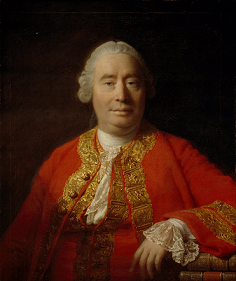
hume.sm1. Emotional detachment. Mindfulness detaches feelings from action and teaches just noticing feelings without being moved by them (feelings as distraction). Yet as both philosophers and neuroscientists know, we need feelings to guide our ethics. For that matter, you can do very bad things mindfully (in cold blood, or as an automaton).

2. Reduced brain power. Mindfulness uses up cognitive resources by making your brain spend energy on being aware of what you’re aware of, so there’s even less attention to direct towards things you weren’t already aware of. If you’re not already attuned to others’ feelings and experiences, you may now be even less likely to notice them.

3. Emphasis on the senses. When mindfulness isn’t being linked to a broader context, some valued bigger picture, it can promote a prioritization of hedonism and sensual pleasures over responsibility and a connection to larger, self-transcending sources of meaning. When you’re being mindful, you can get caught up in your senses, and as I described last time, you may be less attuned to the “big picture.”

4. Lack of guidance. Mindfulness doesn’t tell us how to set up the ordered list of tasks for which we’ll be mindful, the meta-level of structure in which mindfulness operates. If you want your life to be in service of some bigger picture, you have to bring that in from outside of the mindfulness process. (Maybe it’s part of the wider framework of Buddhism, I don’t know, but if so, that’s separate from a mindfulness practice).

There are many times when we should probably prioritize mindfulness over, say, acting on auto-pilot. When we’re interacting with loved ones, patients, clients, children – probably any interpersonal encounter is a good time to be attentive and open and self-aware. When we’re doing something that requires thoughtful decision-making, or careful focus – well, whenever we’re trying to be responsible, there’s a place for mindfulness.

But mindfulness is not enough. Suppose you’re a monk in a monastery, or a visitor on a retreat, and someone else has already decided the entire ordering of your day’s activities, and all you have to do is move from one physical task to another. Then, mindfulness could work very well for you – you could be fully present in each of those activities, or at least you could aspire to it, and that would be fine. But you’re not making any choices; you’re just moving from one anchor to the next. Someone else has set all of your priorities for you.

But if you’re living in the everyday world, and if your life has any complexity whatsoever, then you’ll need to make decisions. It’s great to be mindful when you’re deciding about how to spend your time, of course – mindfulness can help you notice where you’re enthusiastic and where you’re reluctant, and to not get caught up in either one to the extent that you aren’t meeting your priorities, but the priorities themselves come from outside of the experience of mindfulness. Mindfulness itself does not create any input or structure, and it cannot give you any goals; it’s just a mode of awareness and reaction.

5. Less responsiveness. If we do have this structure, these anchors from which to operate, then whenever we’re using one of these anchors, we lose some responsiveness to changing situations.

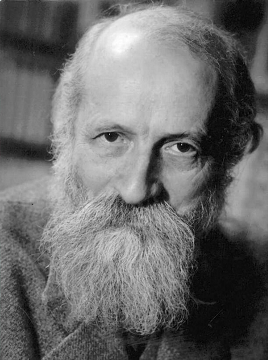
buberMartin Buber, the author of I and Thou and one of the leading philosophers on the ethics of relationships, gave an example from his own experience. Just before World War I, a young man came to him for advice, and Buber responded in a friendly fashion, but “without being there in spirit.” He himself was still focused on his own morning’s spiritual practices, which had been intense and emotionally engaging. Later he learned that the young man had died in the war, having put himself in harm’s way in an act of despair. Buber believed that he had failed in his responsibility to the visitor, that if he had been more fully attentive to him, rather than distracted by his morning’s activities, he may have helped him. (Between Man and Man, p.13-14; Friedman biography, p.7-8). Of course, being mindful in his encounter with the young man would have been one way to be more fully attentive, but the encounter was unexpected and not part of the structure of his day. His mind was still on the topic he had designated for being mindful of.

6. Potentially self-deluding about openness. Although mindfulness requires openness to the world, it may do nothing to actively cultivate our awareness of the ways that we don’t have the answers and don’t know others totally and that we harm them by making the assumption that we do. Mindfulness is more passive about openness – it encourages us to accept the unexpected, but it doesn’t push us towards seeing the unexpected. We may think we’re being more open than we actually are.

When you’re mindfully having a conversation with someone, you’re attending to the thoughts and feelings going through your head, and to your impressions of the thoughts and feelings that are going through the other person’s head, but that only works if you assume you know the person so well that your complete rapport is effortless. And that’s taking a lot for granted. It’s kind of denying them the freedom to be unpredictable, or for there to be aspects of their life that you can’t completely get.

allison.carterThe more effortful form of empathy called “perspective-taking” involves an imaginative leap into their experience, and there’s an ethical component to that, or at least there should be, where we recognize that our own experiences and biases will influence our imagination such that our ideas will always be incomplete and insufficient for fully understanding the other person. I should know, as a privileged white American, that I can never fully imagine what it’s like to have dark skin, but if I’m just taking for granted that I know how a dark-skinned person feels based on our common humanity, without ever taking an imaginative leap into her perspective, then I’m missing out on something ethically vital.

I’d like to think that really skilled mindfulness practitioners would have the ability to keep another person’s possibly very different perspective in mind at the same time that they’re highly focused on their own experiences and responses, but it seems that it would be really difficult. And mindfulness may help us to notice when another person is uncomfortable, but it doesn’t push us to make an imaginative leap to wonder why, or help us know how to respond.

To sum up – the teachings on mindfulness that I’ve come across, whether Buddhist or Western, encourage people to learn to live in the present moment, and that can have considerable value… but! An emphasis on mindfulness can also teach people to curtail a really vast and important part of human experience, which is our ongoing involvement in imaginative worlds that are not our present moment. And in doing that, I think the practice of mindfulness has the potential to lead some people to be excessively self-involved and less aware of others, especially others who are different from ourselves.

I do encourage you to learn more about mindfulness and to experience it for yourself. But whether you see it as a tool or as a way of life, it’s important to remember that mindfulness is only a method. We won’t find substance nor meaning in mindfulness – for those, we need connection and engagement with things we value.

And that’s all I have to say about mindfulness for now. Please let me know what you think!

This post is one in a four-part series:

Mindfulness – Four Caveats
Part I: Why Mindfulness?
Part II: “Always Be Mindful” – Good Idea?
Part III: When Mindfulness Sets Us Adrift
Part IV: Making Choices – Ethics and Mindfulness

Posted in Uncategorized | Tagged , , | 4 Comments

Mindfulness III: When Mindfulness Sets Us Adrift

One benefit often mentioned for mindfulness is the value of shaking up one’s complacent perspective on life. Jon Kabat-Zinn explained that “we lock ourselves into a personal fiction that we already know who we are, that we already know where we are and where we are going, that we know what is happening – all the while remaining shrouded in thoughts, fantasies, and impulses…” (Wherever You Go There You Are, pp. xiv-xv). Or, more succinctly put in a journal article called, “Mechanisms of Mindfulness,”by Shauna Shapiro and colleagues, “Rather than being immersed in the drama of our personal narrative or life story, we are able to stand back and simply witness it.”

I’ll just note as an aside here, that not everyone thinks of themselves as living inside a life-story. There are lots of ways that we might structure our thinking about our lives, such as following the social rules for the roles we have, or checking off life-achievements from a personal master list, or even just floating along from one set of sensations to another. The point is that we all think of ourselves as living in one or more contexts, which give our lives a sense of at least minimal order, and sometimes meaning and purpose.

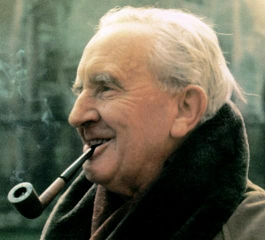
tolkienOne useful way to think about these life contexts is the idea of “secondary worlds.” J.R.R. Tolkien made up this term for talking about the imaginative act of immersing ourselves in a story-world, but it works just as well for talking about all of the other “worlds” or “stages” or “settings” that we encounter that go beyond our day-to-day life experiences. In essence, it’s a conceptual model we create in our minds for understanding some social context – a mental model of some possible sphere of action. Whenever we think about national or world politics, for example, we’re conjuring in our imaginations a “world” that has its own actors and events, causes and effects. We have beliefs about how it works, and it influences our own choices and perceptions, but for most of us, it’s separate from our immediate experiences. We can certainly let it color our immediate experiences – we can make connections between the dinner on our table and the big picture of world politics – but we can also simply eat whatever food is before us without reference to these other actors, that is, mindfully.

Here are some other examples of secondary worlds: situations from one’s past, or possible future; any social context when we’re not there in the middle of it (work, school, family); similar aspects of other people’s lives; other commonly understood spheres of functioning, like Wall Street or Hollywood or the Vatican; games and sporting events; ecosystems; the mental models we use to think about the inner workings of one’s body; the ongoing “conversations” of science and philosophy. Pretty much every time we’re thinking or talking about something other than our current immediate experience, we’re referring to some secondary world.

Secondary worlds can create the contexts for our actions. Secondary worlds can also provide us with the social constructions that allow us to interpret everything we perceive – if we notice a bodily sensation, we then usually resort to socially created interpretations to help us make sense of it.

This means that mindfulness is a technique for turning off our automatic interpretations – our automatic recourse to secondary worlds – which can leave us free to try out new interpretations, or simply to notice and then move on, but which can also leave us feeling adrift. Context (which can include sense of identity) is perhaps the primary source of meaning-in-life.

As I explained in the last post, active immersion in one context means a lack of openness in other contexts, because your attention is already taken up. But there’s also a more passive type of immersion, the sets of beliefs and involvements you take for granted, the world(s) you’re immersed in without trying, and sometimes even without giving them more than occasional bits of attention. Examples might be your identity in terms of roles you find yourself in, or affiliations from your past that you don’t need to think about.

Letting go of our customary contexts can definitely be a good thing: Vacations, travel, catching up with old friends, moving to a new city, and changing jobs are all examples of times when we step out of our usual patterns and expectations and put our attention elsewhere. We’re out of our “comfort zone,” and that can lead to new discoveries, new energy, new perspectives.

Mindfulness can do this too. When you’re practicing mindfulness and its openness, your passive immersion in other contexts is weakened. You find yourself living more in the immediate present, without these more automatic filters and expectations. In Buddhism, they encourage this as “beginner’s mind.” This can be a good thing when it leads you to step outside the life-stories you take for granted, if they’re ones that aren’t consistent with your values. But when your observing self isn’t yet strong, or when you’re feeling doubts about yourself or dismissed by others, these right-here-in-the-present experiences can make you feel alarmingly unmoored. Remember, it is only in connection that we find meaning.

And this brings us to Caveat Three:
Mindfulness can set us adrift.

If we succeed in letting go of our usual life-context, and we aren’t replacing it with another, deliberately chosen context, this can be emotionally stressful. Fully experiencing the present moment can give us the illusion that there is no context for our lives. Experiencing this no-context and the kind of detachment that mindfulness teaches can be depersonalizing, and this can be frightening.

buddhist.teachingNow, the thing is, when mindfulness is taught as a part of Buddhism, this experience isn’t something a beginner would normally encounter. Mindfulness traditionally is learned in the context of one’s cultural values – a Buddhist in Asia, for example, is not stepping out of his usual belief systems when he practices meditation. At a minimum, a Buddhist student learns mindfulness and other meditative practices in the context of an ongoing dialogue with his teacher. All beginning Buddhists, in Asia or the West, are expected to work with a skilled teacher and to learn in the context of this relationship. When mindfulness is integrated into a Western clinical practice, like Acceptance and Commitment Therapy, it likewise is taught in a context. In this case, the person focuses on identifying her deepest values and committing to live accordingly. Depersonalization doesn’t occur in the context of meaningful action.

If you’re practicing mindfulness on your own, however, there can be problems. If the context you find yourself in is denying the value of your beliefs and experiences (shaming, gaslighting, or otherwise debasing you), or if you’re going through a life transition that involve experiencing a loss of your customary identity (such as losing your job or an intimate relationship), then “beginner’s mind” can set you adrift and lead to panic as you vividly experience a sense of loss of self. You will then have to reassert that “observing self” along with a sense of fundamental “okayness,” and this becomes harder if you’re simultaneously experiencing a loss of connectedness. At times like these, you’re probably much better off if you focus more on your values and strengthening your other connections.

A famous American Buddhist author and teacher, Jack Kornfield, recently told the New York Times (1/31/14) that even as an experienced practitioner, mindfulness and other forms of meditation didn’t always help. As he put it, “There were major areas of difficulty in my life, such as loneliness, intimate relationships, work, childhood wounds, and patterns of fear that even very deep meditation didn’t touch.” He added,“Meditation and spiritual practice can easily be used to suppress and avoid feeling or to escape from difficult areas of our lives.”

Meditation, including mindfulness, is not about meaning and connection. We are more likely to find meaning and connection in immersion, particularly in that “reflective immersion” I described in the last post, when we’re aware not only of what we’re encountering but how we ourselves relate to it. Participating in “secondary worlds” is the “big picture” for our lives. It’s how we give our actions a bigger significance. It’s how we get things done. Mindfulness can help us be focused and appreciative, but it’s only part of the story.

Tomorrow, Caveat Four: Mindfulness and Making Choices

This post is one in a four-part series:

Mindfulness – Four Caveats
Part I: Why Mindfulness?
Part II: “Always Be Mindful” – Good Idea?
Part III: When Mindfulness Sets Us Adrift
Part IV: Making Choices – Ethics and Mindfulness

Posted in Uncategorized | Tagged , , | 3 Comments

Mindfulness Caveats II: “Always Be Mindful” – Good Idea?

“Chopping wood is meditation. Carrying water is meditation. Be mindful 24 hours a day, not just during the one hour you may allot for formal meditation… Each act must be carried out in mindfulness.” – Thich Nhat Hanh, The Miracle of Mindfulness!, p.24.

As I described in my last post, mindfulness involves keeping your attention in the present moment, and when it wanders off elsewhere, you note it and patiently bring it back. If you’re cutting vegetables, you’re cutting vegetables, not also thinking about what your boss said earlier in the afternoon. And this is good, both because you’ll be safer with that knife you’re using, and because you’re then attending to the sensory experience of interacting with the vegetables, which can be pleasurable, and you’re not taking food for granted, either. But if you’re always mindful, then what time is left for thinking about what your boss said? Or for planning something, solving a problem, or thinking about situations you’re not currently bodily right in the middle of, like the latest Supreme Court decision?

A recent New York Times article (1/14/2014) talked about several issues with mindfulness and noted some contrary research. The mind-wandering that is so scrupulously cut short during mindfulness exercises is an important element in creativity, for one thing. (Mindfulness also inhibits “implicit learning,” which is the kind of learning you do by just picking things up through exposure and effort; I’m not going to follow up on that here.)

What happens when the mind wanders? In essence, it’s engaging imaginatively with some situation that’s not in the here and now. It can be stressful and counterproductive when the mind keeps wandering off to obsess about something that’s in the past and can’t be changed, or to fret about things that are beyond your control and may never come to pass. In these cases, a dose of mindfulness can help us notice these patterns and sometimes learn to let go of them. At other times, though, more positive forms of mind-wandering like daydreaming can help us see what our real priorities are and can even help with problem-solving.

But I want to think some more about this matter of “engaging imaginatively with some situation that’s not in the here and now.” Remember when I made the distinction between focusing exclusively on activity (“Just do X”) and being mindful about an activity (“Just do X and know that you are doing X”)? Well, here’s a good example: reading a really good book. If you’re fully absorbed in what you’re reading (or watching on a screen, or listening to someone tell you), then your mind is fully in that narrative world – you’ve tuned out your physical environment. You don’t necessarily notice what someone else is doing right beside you, or whether you’re hungry or thirsty, and if you do happen to notice these things, they’ve disrupted your immersion in the story world.

When we’re absorbed in a book, we are “just doing X” but we clearly are not “knowing that you X” because we’ve lost all awareness of ourselves at all. In fact, not possible to read properly while at the same time maintaining a full awareness of self/body/etc., and experiences that bring us back to awareness of self/body/etc. destroy this immersion experience; we have to take moments to regain it.

In other words, immersion is a “just X” experience, and it can even be a less distractable one than ones where you’re making an effort to focus on something. Along with reading, any other sort of involvement in a story – like listening to a storyteller, watching a film or TV show, or playing some kinds of video games – also qualifies as immersion (which in psychology is also called absorption, or “narrative transportation,” because you’re “transported” to a different world).
Image
But immersion is a much broader phenomenon than that. It happens every time we put some context at the forefront and tune out the rest. When friends meet up in a supermarket and get involved in a conversation, they’re often oblivious to the people trying to maneuver their carts around them, and they may even temporarily forget that they’re shopping. When we’re really involved in a project for work, or a recreational activity, we set aside the other things going on and can lose track of time and our bodily needs.

Even dogs and cats do this. A few days ago, I saw a dog so excited about interacting with his humans that he completely didn’t notice he was jumping into the street, with oncoming cars. (He was fine.) And when my kitten Sorin is plotting a particularly challenging jump, it’s next to impossible to get his attention with the toys or treats that normally would fascinate him.

Immersion is a really important aspect of our lives. It’s not just reading or watching a movie, it’s also any sort of real give-and-take conversation, and pretty much any activity that involves thinking. All of those involve immersion. This brings us to our second caveat.

Caveat Two:
Non-mindfulness can also be valuable.

The Buddhist writings I described above may seem to imply that the ideal is to be mindful all the time, and encourage us to build up to this ideal by practicing mindfulness during lots of specific times. But I’d like to suggest that the skill we should be building is to know how to optimally integrate our mindful time with our non-mindful time, and to know when the latter may be the better choice for us.

In an earlier post, I talked about times that it can be much better for us not to be mindful. As one friend described it, mindfulness privileges the body and the now. Sometimes it’s best to have our attention elsewhere.

If we’re experiencing moderate or chronic pain, then mindfulness can be very helpful, because it strengthens the part of us that can experience the pain without getting caught up in it. But if we’re experiencing severe physical or emotional pain, it may be better just to put our minds elsewhere and get through the experience with as little awareness as possible. Going into shock, for example, is part of the wisdom of our bodies that lets us function when a full awareness of our situation might easily disable us.

Here’s another example. One way of thinking about post-traumatic stress disorder (PTSD) is being so immersed in a painful context that the person can’t really leave it, even when it’s years in the past and maybe thousands of miles away. Veterans describe programs for working with horses and dogs as helpful for PTSD because they have to bring their awareness fully into this new context in order to take care of the animals. If they immerse themselves into “conversations” with the animals in their care, they gain that many moments of respite from falling back into immersion in their prior traumas. Simply focusing mindfully on the sensations that come up when they have these memories doesn’t have the same healing effect as replacing a harmful immersion with a healing one.

Or, in a more common situation, sometimes we need to think about the future, or the rest of the world, which can both be pretty abstract. If we’re focused on our immediate physical selves, then we’re not doing that, and we might be biasing our thinking undesirably (more hedonistic or self-focused than we want to be, for example).

So what I’m saying is, being “actively immersed” in one context, giving it your full attention, precludes being “open to experience” in another. (Later I’ll make a distinction between being “actively immersed” and “passively immersed,” where you’re not necessarily paying attention, but where you take your immersion in the context for granted, so that it colors your perceptions and evaluations.)

I don’t want to imply that Buddhism, the source of mindfulness-thinking, has no place for imagination. It certainly does. In Tibetan Buddhism, guided visualizations are one of the main ways to receive advanced teachings. The Zen teacher Thich Nhat Hanh, one of the leading proponents of mindfulness practices, has offered numerous imaginative exercises for observing one’s negative feelings, such as anger and fear, and learning to treat oneself more kindly. In these contexts, I think they’re teaching how to integrate mindfulness and imagination, through specific immersive practices.

For the rest of us, if we see a value to mindfulness, but we also have things we want or need to immerse ourselves in, how can we combine them? I don’t know any specific techniques, but there’s an interesting way to think about it, from the psychology of reading.

When you’re reading fiction, there are roughly three degrees of immersion you might experience. The first is being fully immersed in the story, completely caught up in it, not aware of anything else. This quality is what makes for good popular fiction, like a thriller or a romance novel – it’s purely recreational, and the author’s skill puts you completely in her world. Then at the other extreme, you’re resisting immersion. The story is too boring, too alien, or too poorly written, or you’re too distracted, and although you can make sense of what’s going on in the story, you’re not inside its world at all.

But there’s also a third way to read, the way that “real” literature aspires to, which we can call “reflective immersion.” You’re immersed in the story world, but your mind is also busy. You’re relating current events in the story to things that happened earlier in the story, or you’re thinking about how things happening to one character might affect another, or maybe you’re even relating things about the story to things in the real world, or a completely different book you once read.

It’s possible that the more you exercise this skill of integrating across contexts, the better you’ll be at it altogether. Reflective immersion isn’t normally mindful, since we’re not usually conscious of it, but it would be interesting to see what results we’d get it if we experimented with making it so.

Tomorrow, Caveat Three: Mindfulness and Alienation

This post is one in a four-part series:

Mindfulness – Four Caveats
Part I: Why Mindfulness?
Part II: “Always Be Mindful” – Good Idea?
Part III: When Mindfulness Sets Us Adrift
Part IV: Making Choices – Ethics and Mindfulness

Posted in Uncategorized | Tagged , | 5 Comments

Mindfulness – Four Caveats / Part One: Why Mindfulness?

In the world of health behavior research, mindfulness is definitely hot. New benefits are being discovered all the time. Mindfulness helps people cope with stress, by reducing their cortisol (stress hormones) and blood pressure and increasing their resilience, and in turn these benefits also improve the immune system. Mindfulness can be a valuable part of treating depression and anxiety, by teaching people how to notice negative thoughts without getting caught up in them. And by its very nature, it helps people increase their focus, training the mind to stay on-task and avoid distraction.

Mindfulness is definitely a skill worth having and practicing. There are a few issues, though, that seldom get discussed in the middle of all the hype. What are the potential costs of having a mindfulness mindset? Please follow along as I explore some of these costs in a series of four blog posts. I’d love to hear your thoughts.

First, let’s be clear about what mindfulness is.

A recent New York Times article (1/31/14) says that “mindfulness just means becoming more conscious of what you’re feeling, more intentional about your behaviors and more attentive to your impact on others.”

Well, no, that’s not it, really. Let’s call that “Mindfulness Light” and set it aside. I’m not going to raise any objections to being self-aware, conscientious, and sensitive to others’ feelings, and when researchers talk about mindfulness, that’s not precisely what they’re referring to.

Jon Kabat-Zinn, a psychologist who’s been particularly active in promoting mindfulness practices and research, describes mindfulness as “paying attention in a particular way: on purpose, in the present moment, and nonjudgmentally” (Wherever You Go There You Are, p.4).

In 25 Lessons in Mindfulness, Rezvan Ameli lists six things that mindfulness practice can cultivate:

• Attention (sharpening our awareness of our sensory experiences and the contents of our mind)
• Present moment orientation (letting go of thoughts about the past or future)
• Nonjudgment (staying non-critical of the self and others)
• Letting go (increasing patience)
• Beginner’s mind (keeping a fresh perspective)
• Acceptance (engaging in life more fully)

Mindfulness means paying close attention to your thoughts and feelings, without becoming caught up in the content of the thoughts or interpreting the feelings. Imagine sitting very quietly and paying attention to what’s going on in your mind. Hm, my knee itches, now my ankle does. Now I notice a sound out in the street – it’s Marcus, probably, bouncing a basketball. Oh, that’s an interpretation, let go of that, just focus on the qualities of the sound. Blrrrt. Blrrrt. Braaap. Blrrrt. I wonder what Jonathan’s typing and when he’s going to go outside; is he still thinking about the new Magic cards? Or is he posting on a thread, what was it he was reading about earlier? Was it a health care thing? … That was a pretty long thought, I got caught up in that one. Back to the present… hey, am I thirsty? Back to the present, breathing in, breathing out…

Okay, that was a pretty good example – I tried to report here where my mind was going as I experienced those few moments. I didn’t notice everything I was doing, though – I never mentioned my typing fingers or looking at my computer screen, although obviously I had some attention there too (without thinking consciously about it).

You simply can’t notice everything. If your attention is on your breathing, you may not notice noises in the background. If your attention is on your steps as you walk, you’re probably not noticing your heartbeat, or the weight of your hair on the back of your neck. The idea is to be aware of what you’re noticing, and to accept that it’s there without reacting – or if you do react, notice that too, and then let it go.

As a Buddhist practice, mindfulness can be a form of meditation, where you sit in one spot and anchor your awareness on your breathing, or bodily sensations, and then note where your awareness wanders. Buddhists sometimes also dedicate their walking, cooking, eating, etc. to mindfulness, and put that activity at the forefront of what they’re attending to.

Practicing mindfulness can be a really valuable way to balance out our tendencies to “live in our heads,” for those of us who, for whatever reason, spend much of our time thinking about things. Personally, I live in a beautiful place, and it can be wonderful to remember to pay attention to the world around me, stopping and smelling those literal and metaphorical roses, and really noticing that I’m doing so.

Mindfulness can also be a useful mental health practice, especially for people experiencing depression or anxiety, because it can help keep negative thoughts from spiraling out of control. Imagine you just took an important exam, and you realize you made a mistake on one of the problems. Your thoughts might go like this, “Ack, I made that mistake. But that’s just the one I know about – I probably messed up most of that whole entire section. Now I’m going to get a C at best, and I need a B to stay in good standing. Why am I even doing this, anyway? I should seriously think about dropping out of the program – I really am not good at this.”

Or your thoughts might go like this, “Ack, I made that mistake. Oh. I just had the thought “ack, I made that mistake.” I hope that won’t start spiraling into a big negative fuss. It was just one thought. Hm, now I’m starting to feel worried about my grade. Okay, that’s what worry feels like. Knot in my stomach. Let’s just quietly notice that feeling… well, okay, whatever.”

The idea is to be aware of unpleasant feelings when we have them, without trying to suppress them, judge them (or ourselves), or change them. We just rest there with the feeling in our consciousness until some other thought or feeling naturally takes its place.

This brings us to Caveat One:
Mindfulness involves the observing self.

Books about mindfulness are not consistent. Sometimes they’ll say that mindfulness is there when you “Just do X,” whether X is breathing, eating a pretzel, playing with a kitten, or standing hip-deep in the river and fishing. “Just do X.” At other times, they’ll say that mindfulness is when you “Just do X, and know that you are doing X.”

These are not equivalent statements.

In The Miracle of Mindfulness!, the Zen teacher Thich Nhat Hanh quotes an ancient Buddhist sutra on mindfulness: “When walking, the practitioner must be conscious that he is walking. When sitting, the practitioner must be conscious that he is sitting. When lying down, the practitioner must be conscious that he is lying down.” (p.7)

When you’re doing X and you’re conscious that you’re doing X, the part that makes it mindful is that you’re strengthening a part of your awareness that Arthur Deikman and others call the “observing self.” It means that you’re identifying with this calm center, not with the flurry of somewhat random thoughts and emotions that continuously pop into your head. The more you identify with this calm center, the more you strengthen your sense of the “you” who remains constant throughout all situations. You become more even-keeled, less automatically swayed by emotion.

(Then, if you’re a devoted practitioner of Buddhism, you can learn how to transcend this sense of self in favor of even greater insights, with the realization that even the “self” is impermanent and ever-changing, but I’m not qualified to talk about that, and that’s not the point of these posts anyway.)

I once went to a talk by a Tibetan Buddhist teacher, Tai Situ Rinpoche, who said that he was surprised when he started working with Westerners, because their sense of self was so weak compared to the Asians he’d known. Isn’t that ironic? We’re all about our individuality, but at least in this context, we have less of a sense of who we really are. Mindfulness is about strengthening that sense.

Tomorrow, Caveat Two: The Value of Non-Mindfulness

This post is one in a four-part series:

Mindfulness – Four Caveats
Part I: Why Mindfulness?
Part II: “Always Be Mindful” – Good Idea?
Part III: When Mindfulness Sets Us Adrift
Part IV: Making Choices – Ethics and Mindfulness

Posted in Uncategorized | Tagged | 4 Comments

Mini-update II

This is just a quick post to say I’m still working on those mindfulness posts.  They’re getting rather, shall we say, “thorough,” in fact.  Soon!


Posted in Uncategorized | Leave a comment

Mini-update

It’s been nearly six months since I’ve posted here – I’ve been caught up in work and haven’t had time to develop the ideas I want to share here. Within the next week or two, though, I’m planning to write a post or two on problems with mindfulness.

Posted in Uncategorized | 2 Comments