Three relationships with our collective stories: Authority, democracy, and the big yawn

Last week, I showed that giving people the facts not only won’t make them listen, it all too often makes them double-down and get even more entrenched in their beliefs. Understandably, this is frustrating! This week I’m going to share the heart of the book I’m writing – a new way to think about this situation that points to some options we might have for addressing it.

What I’m talking about is the relationship we have with a given story-about-us, especially the “master narratives” that everyone in our society generally accepts.

Let’s start with an analogy. According to retired University of Toronto psychology professor (and novelist) Keith Oatley, there are three ways to read a book. If it’s really exciting or compelling, we can find ourselves so deeply engrossed in the reading that we lose all awareness of the outside world – we don’t notice if we’re hungry, or what someone’s doing in the next room, or how time is passing. We’re “fully immersed” in the book. The same thing can happen when we’re watching an exciting movie or sporting event, or playing a fast-paced game. Alternatively, if we’re reading something more slowly, over a period of days, and thinking about it when we’re not reading, and making connections between what’s happening in the story and our own memories and the circumstances of our own lives, we’re more “reflectively immersed” in the book. Or maybe it’s a terribly boring book that we’re being forced to read as an assignment, and it doesn’t feel real to us at all, and we’re resisting it every step of the way, then we’re “cynically detached” from the book, holding it at a distance mentally.

Similarly, with “stories about us” (meta-narratives) we can be the same way – fully immersed, reflectively immersed, or cynically detached. It’s not a perfect analogy, because of course people deeply engrossed in one worldview can still be aware (at least on an intellectual level) that others exist. On the other hand, our background “immersion” in a story of our people can be even more powerful because it doesn’t just start with sitting down to read or watch a movie and end when you get up again. Instead, your worldview and its stories (the collective progress we’re making, or the impending collapse of civilization from climate change, or the need to restore America’s greatness, or whatever) are there in the background of your life all the time, ready to surface whenever someone mentions something related.

Let’s look at these three possible relationships to our collective stories more closely.

If you’re fully immersed in a story-of-us, you believe the way you see the world is true and that other ways of seeing the world are misguided or wrong. The social institutions you’re a part of and your media choices fully support it, which means you may live in a “bubble” or “echo chamber” that always reflects this worldview back to you. If you’re aware of other options, you feel loyalty to your own. You’ve probably even been taught to defer to the authorities behind this worldview – leaders, institutions, and sometimes holy texts.

If you’re reflectively immersed in a story-of-us, you believe the way you see the world is one of several valid stories, and that it’s your responsibility to evaluate these stories for accuracy and ethical impact and then choose one or more to live with. It’s a conscious choice. Recently, New York Times columnist David Brooks wrote about how he had done just that. I’m not endorsing the position he ended up with; it’s his choice to make, and we can trust that he picked one that matches his temperament and values. It’s his process that matters here.

Note: Reflective does not mean liberal! There are many thoughtful conservatives out there who understand the appeal of liberal and progressive worldviews but prefer caution and stability. There are also many on the Left who can find other worldviews appealing for relatively superficial reasons, without necessarily reflecting on their consequences (and of course, there are liberals and progressives who don’t see other perspectives as valid).

On the other hand, if you’re cynically detached, you probably see yourself as powerless to participate meaningfully in any of the stories-of-us, or you don’t like the options available and would rather not even bother thinking about it any further. Maybe you’re even buying into a story about detachment, like the Deep State argument that there’s some great conspiracy pulling all the strings, leaving you no real options. Unfortunately, that’s just an illusion of power over your worldview that doesn’t compare with doing the harder work of finding a way to contribute; you’re still basically at the mercy of your people’s “master narrative.”

Sometimes, you really are powerless to make a difference. Ideally, if that’s the case, instead of identifying with the broader community that’s shutting you out, you’ll focus on a different one where you do have the ability to make a difference, and immerse yourself in that one instead. A good example is modern China – the government really doesn’t want its people to think critically about its policies, and if you try, you could end up in trouble, like the dissident poet Liu Xiaobo. But you’re welcome to immerse yourself in the story of your own family – sometimes there are huge family reunions for, say, all the descendants of Kong Fuzi (Confucius), and other extended families do that too.

Reunion of descendants of Confucius:

confucius descendants

We have different relationships with different meta-narratives. Richard Dawkins, a famous British scientist who is also a well-known atheist, presumably is fully or reflectively “immersed” in a storyline of scientific progress and “detached” from any storyline promoting religion.

For our society’s master narratives, full immersion is probably the default – we grow up learning how the world works and having expectations based on that. We may also learn how to think critically and question that understanding, but that comes later, and it’s optional. Sometimes we stick with what we know until we find something better. Sometimes young people will try out a series of worldviews until they find one that fits, at which point they’re able to be reflective about them. Sometimes a worldview feels so right that we decide to fully immerse ourselves in it and think everyone else should do the same. (And sometimes our government decides that for us – compare today’s authoritarian China with China during Chairman Mao’s Cultural Revolution, where – like in Stalin’s Soviet Union or today’s North Korea – every citizen was expected to devote their lives to their people’s story. If you’re reading this, you have choices.)

However! The very foundation of democracy is that reflective stance. As Alexander Hamilton wrote in the very first of the Federalist Papers, when he and others were trying to persuade the colonists to accept the newly drafted U.S. Constitution, democracy is about “reflection and choice.” Our Bill of Rights ensures that we have freedoms of speech, religion, and so on – in other words, that we can choose our worldviews and collective stories.

How do we make that choice? There are many sources of information that can give us what we need for informed decision-making about the stories we want to guide our lives together. Education and open-minded travel are obvious candidates. Responsible journalism is absolutely vital and, frankly, probably one of the noblest professions of our time. Learning about science is important, too, as the entire point of science is to challenge existing understandings and determine how confident we should be in what we think we know. And exercising our imagination is essential: An excellent way to learn about other worldviews is by reading fiction where you take the point of view of people unlike yourself.

As Americans, democracy is our birthright. No matter how much loyalty you may feel towards any leader or political party – and some of them do seem to be demanding loyalty these days – our highest obligation as citizens should always be to the reflective process that underlies democracy and the freedoms of self-expression that make it possible.

*   *   *

I’m writing a book on this topic, and I could use your help. An important part of the publishing process these days is for the author to be able to show the publishers that people are interested in their work. If you enjoyed this post, please “like” it and share it on social media. If you’d like to read future posts, please “Follow” by entering your e-mail address at the top of the right-hand column. Both of those steps will help me show the publishing world that people are listening. Thank you!

Posted in narrative science | 7 Comments

A farewell to facts

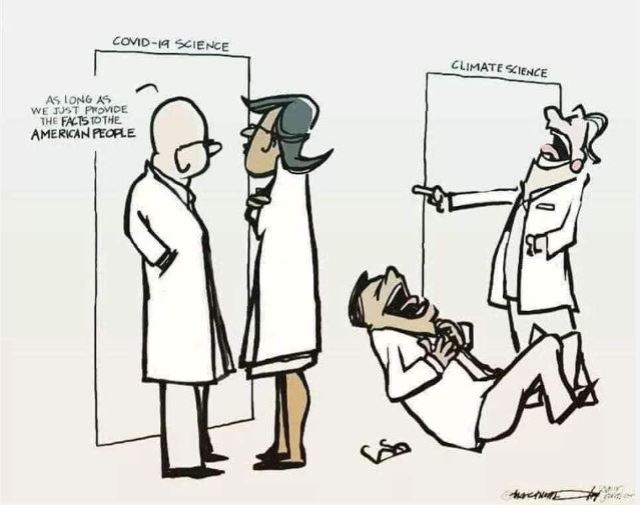
A childhood friend, who is now a retired journalist and journalism professor, posted this cartoon on Facebook recently:

info_deficit_comic

(Original source)

A few hours earlier, another childhood friend had posted something to Facebook – something political – with so many factual errors that I was venting to my partner about it. He thought I should respond; I thought not.

At least a dozen of my Facebook friends are people I knew when I was a kid. My parents divorced when I was 12, and after my mom relocated us to another town, I thought I’d never get to know what happened to all the kids I’d been growing up with. I was thrilled when Facebook gave me the opportunity to reconnect. I love them! It’s fascinating to learn about the adults they’ve become.

It’s also, as I’ve found, an opportunity to see for myself what people outside my day-to-day life are thinking. The challenge is, whether and how to respond when their facts are… iffy.

The comic above illustrates what we social scientists call the “information deficit” model. The idea is, people are lacking in facts, so if you give them the facts, they’ll understand and behave “rationally.”

That model might work if we went around thinking that there are topics we don’t know anything about but should, and then we had the time and inclination to take in the information when it’s offered. But usually people don’t work like that. Either we figure we know enough about the topic to have an opinion, or we find someone who’s supposed to know about these things and then trust them to do their job.

It’s more realistic to go with a “motivated reasoning” model, like I described in my recent post on how stories-about-us work. We figure out how we feel or who we trust, and we use that information as a shortcut to decide what we think about things. Once we’ve made up our mind, we’ll go to more mental effort to defend our position, if need be.  We’ll use the evidence that supports our position, and ignore the evidence that doesn’t. Research by Dan Kahan and others has shown that this motivated reasoning is equally common for conservatives and liberals, and the more educated you are, the more likely you’ll use the facts to bolster what you already believe, rather than starting from scratch.

In the real world, this leads to some strange things. We saw it with the COVID virus, where a few individuals who had been vocal early on about the need for caution later changed their minds entirely. For some, this is surely “COVID fatigue,” feeling like it’s been “enough already.” They want or need the closure that comes from having it all behind us. For others, though, it seems that we can see the power of political party identities in action – when the virus was treated by both parties as a common threat, they strongly favored protective measures, but when Republican leaders decided to treat the virus as a partisan thing, they quickly fell in line and started saying the opposite of what they’d said two months before.

I’m also reminded of a story a family member told me about how firmly someone he knew was promoting some supposedly conservative policy position, but he had it backwards – the position he was espousing was actually the liberal position. Awkward!

Motivated reasoning includes selectively choosing facts to make one’s case, but what about “facts” that are outright wrong?

I’ll admit, I’ll sometimes chime in, when I know my experience has given me better access to the information than the person posting could be expected to have. Sometimes they’re actually interested in the information, which is cool, but if they aren’t, that’s fine too. It’s not about “fixing them.” Rather, it’s about me being responsible.

Most of the time, though, I think there’s a better way to look at it. It’s basically how we should think about other people’s religions. If you have religious beliefs, you may consider them literally true, but even if you don’t, you probably consider them metaphorically true, and the rest of us should consider them metaphorically true as well. What do I mean by that? It’s like the “Yes, Virginia, there is a Santa Claus” letter – regardless of whether Santa is physically there at the North Pole right now, supervising the elves building toys for delivery in four and a half months, there is also the living idea of Santa Claus that brings value and magic to children and their adults alike. Or, say, Robin Hood – whether or not some medieval Englishman actually forcibly redistributed the wealth in 1452771009-movies-robin-hood-disney_smNottingham, he’s a part of our cultural heritage who still inspires us today. So if your friends are Christian and you aren’t, you could get hung up on whether certain teachings in Christianity are literally true (the Virgin Birth, for example), or you could honor the feelings behind those teachings (respecting Jesus as an extraordinary person whose life could have important lessons for us). We can look beyond the literal words to see what deeper meaning is there.

So when we’re evaluating someone’s social media post, the important thing is not always whether the facts, suppositions, and suspicions are correct; it’s whether they feel right to the person saying them. The post may be expressing a deeper truth, and if so, that’s what we should respond to.

However! How we go about responding to these “deeper truths” is important! If we think, “They said X but they really mean Y,” that’s reductive and not respectful. They probably mean both X and Y, and they might mean Z instead of Y, who knows? If we say, “You said X, did you really mean Y?” that’s reductive, disrespectful, and patronizing, too.

On the other hand, if you want to start an actual dialogue, you could say, “When you said X, it also seems to me that you’re saying Y, am I understanding?” If they’re also up for dialogue, you might go on to say that you don’t share their X-thoughts, but Y makes sense to you. Common ground!

It’s hard to resist the immediate temptation to correct the facts. I can say from talking with many inveterate fact-correctors that they feel like they’re respecting the other person’s intellect. I don’t think it feels like that on the receiving end, though – it often feels like condescension.

We could even say that the left/right split in the United States is only one facet of our polarization. Another facet is the deep split between those who want us to be able to move past the toxic aspects of polarization and those who relish it. Ironically, and unfortunately, the very act of pointing out that someone has, however innocently, been manipulated by extreme partisans is an act that reinforces that toxic divide.

I think the answers involve respect and trust. And probably patience, though I’m not so good at patience myself. If someone acts like a decent human being in all the other spheres of life but seems to go off the deep end where politics are concerned, we should probably focus on the “decent human being” side and not on what can feel like the “unfortunately manipulated” side. The rest of it may take time.

Posted in Uncategorized | 1 Comment

A species caught up in stories

Science fiction novelist Becky Chambers described my book topic very well, in her most recent Wayfarers novel, Record of a Spaceborn Few. The characters are humans, many generations after a greatly damaged Earth had been left behind. Here, an archivist of the great Exodus Fleet is explaining her life’s work to a young man:

“Our species doesn’t operate by reality. It operates by stories. Cities are a story. Money is a story. Space was a story, once. A king tells us a story about who we are and why we’re great, and that story is enough to make us go kill people who tell a different story. Or maybe the people kill the king because they don’t like his story and have begun to tell themselves a different one. When our planet started dying, our species was so caught up in stories. We had thousands of stories about ourselves – that’s still true, don’t forget that for a minute – but not enough of us were looking at the reality of things. Once reality caught up with us and we started changing our stories to acknowledge it, it was too late.” (p.315)

That’s what I’m writing about – the psychology of these stories, which have a life of their own, and which can easily lose touch with reality. Thanks, #beckychambers!

Posted in Uncategorized | Leave a comment

In a League of her own

A few weeks ago, Alexandria Ocasio-Cortez announced a “small quarantine accomplishment”: She’s made it to rank Silver III in League of Legends. Predictably, the lively congresswoman’s tweet met with a scornful backlash – she should give back her salary or resign because she’s playing games while Americans are getting sick and dying.

I don’t play League myself – at my age, I wouldn’t have the necessary reflexes. My younger son is on our university’s varsity League of Legends team, though, so I’m familiar with the intense focus it requires.

League of Legends is a multiplayer online arena game from Riot Games. It’s a team sport played with five players on (usually) ad hoc teams. Each player takes on one of five strictly defined roles using one of a vast range of possible characters, each with its own strengths, weaknesses, and special abilities.

Players can enjoy the game casually or work to earn a rank. The ranking system begins at Iron IV, with skilled players advancing to Iron III, Iron II, and Iron I, then moving from Iron to Bronze, and later to Silver, Gold, and Platinum, and finally to Diamond. AOC’s rank of Silver III puts her in the top 60% of several million ranked players – it’s a fine achievement, but hardly evidence that she’s devoting too much free time to the game.

Meanwhile, many of the retorts to the angry tweets hold up Trump’s expensive golf hobby as equally problematic. They’re both wrong. League and golf each provide excellent mental health benefits. Any immersive activity that takes your attention away from work and other stressful responsibilities provides a restorative mini-vacation – League being more analogous to Obama’s basketball playing than either president’s golfing. It requires a complete mental and physical focus sustained for up to an hour at a time; the mind can hardly wander elsewhere, let alone ruminate on problems back at the office. It’s an excellent strategy for switching gears and ensuring we have the mental resources to respond to new challenges.

Another value of recreational games was described by psychologist Daniel Berlyne back in the 1960s. When we sit down to play a game (or watch a movie or sporting event, or read fiction), our feelings of anticipation and excitement provide an “arousal boost” that is later relieved abruptly, in an “arousal jag” that releases tension. It’s the same mechanism that lets us unwind when we’re watching fast-paced or suspenseful films (or reading the latest Murderbot novel, my own preferred downtime activity). Yet games are better than more passive forms of recreation because they also let us use recreation to help meet our psychological need for developing competence – and to see evidence that we’re doing so through a rank system that compares us with our peers.

Complaints that Ocasio-Cortez isn’t doing her job just reveal that the commenters see her one-dimensionally. It’s the kind of mild dehumanizing that comes naturally to those not versed in perspective-taking, as if she ought to be a legislation-making machine that switches on at daybreak and powers down 16 hours or so later.

The constituents in New York’s 14th congressional district can be reassured. League of Legends is probably an excellent quarantine activity for its congresswoman. But keep watching – if she tells us she’s made Diamond II, maybe Congress should get back to work.

Posted in Uncategorized, US politics | Tagged , | Leave a comment

Stories-About-Us: How They Work

In my last few blog posts, I’ve been focusing on our “stories about us” (“metanarratives”) – the topic of the book I’m writing. I hope the book will reach a broad audience, because it’s vital information we all need to know, especially if we ever want to overcome the toxic polarization that prevails in the United States, the United Kingdom, and other struggling democracies.

This month, though, I’m writing about this topic for an academic journal, using more formal language and concepts. Today I made a figure for my article, and I thought, why not share it with everyone? So I made a new version with friendlier language, just for you. In my last few blog posts, I’ve talked a bit about “stories about us” (“metanarratives”) – the topic of the book I’m writing. I hope the book will reach a broad audience, because it’s vital information we all need to know, especially if we ever want to overcome the toxic polarization that prevails in the United States, the United Kingdom, and other struggling democracies. This month, though, I’m writing about this topic for an academic journal, using more formal language and concepts. Today I made a figure for my article, and I thought, why not share it with everyone? So I made a new version with friendlier language, just for you. (If you’d really rather see me using proper terminology, here’s the formal version.

Figure_X_Message_Processing_informal_3

This drawing shows how we process “stories about us,” like “Climate change could destroy our way of life,” or “We need to make America great again,” or “Give me your tired, your poor, your huddled masses yearning to breathe free,” or my favorite bumper sticker, “Visualize whirled peas.”

We start with the message, on the left. The big red arrows show what the message offers to its audience members, and then each of us is the person on the right, encountering the message and accepting or rejecting it.

The first element is the basic message. Let’s use the Statue of Liberty example. It says that the United States is a haven for the world’s oppressed. “We” are the welcoming country. Another important actor is involved, the “huddled masses” – at that time, mostly Europeans. The poem tells us that adding these people to our country makes it better, so it’s a story of Improvement.

However, just saying, “We want poor people to come to America” isn’t tremendously attention-getting. If we want people to heed this message, we need to make it a lot more interesting. And we did – the poem is carved on the base of the statue, which stands in New York’s harbor and welcomes new arrivals. The association of the message with this vivid image makes it far more emotionally resonant.

Now let’s take the example of climate change. The “basic story-of-us” is that if we don’t change our economy, the sea level will rise and humanity is going to suffer. It’s about a group we’re a part of, “Humanity,” both as the victim and the cause of the problem. Another important actor is involved, “Nature,” powerful and potentially beyond our control.

Here the message itself is dramatic – it’s about urgency and a last chance to act. We don’t have to work hard to make it attention-getting. It’s easy to pluck on our heart-strings with pictures of polar bears losing their homes, right now, and as we’ve all heard, many major cities could find themselves in serious trouble within our lifetimes.

As you can see, the interesting and exciting bits that tell us it’s really important to pay attention can be vivid and dramatic. Anything beyond the ordinary counts, and the more it captures our attention, the more powerful the message can be. As we’ll see later on, sometimes the drama is a turn-off, too. To avoid that happening, some messages are crafted with much more subtle “interesting bits,” like the “Morning again in America” campaign slogan for Ronald Reagan I mentioned in my recent post. In that one, the simple word “morning” is evocative without being dramatic.

So, a message is out there, and we’ve encountered it; we’re paying attention. The message is offering us three things: Emotion, Meaning, and Identity.

The emotion we feel from the message helps to solidify the importance of the message for us. If we accept the message, it means we care about it; we’ll remember it. We may feel pride in our welcoming country; it provided a home for our own ancestors, when they left the places they lived before. If we immigrated here recently, we’ll also feel gratitude and excitement that our families may be able to join us. We may feel alarmed about the prospect of climate change, and helpless or frustrated that we can’t do much on our own to prevent it. That’s the other thing emotion can do – motivate us to act, if we can.

Meaning has two, ahem, meanings. The first way we get meaning from these stories-about-us is that it helps us make sense of the world. Why are there so many people in my community who haven’t yet learned English? Right, America is a welcoming haven; maybe they left bad circumstances elsewhere. Why have we had so many more forest fires in the late summer in the Western U.S. lately? Part of climate change means the forests are a lot more dry, and a summer lightning storm can spark major wildfires.

The other type of meaning we can get from these group stories is the opportunity to make our lives more meaningful by participating in them. Anyone in the military has shown they value the American way of life, and their service to our country gives them a place of honor in the Stability story. Those of us with careers in science are contributing to a Progress story – we hope what we learn will make things better for others.

One of the most important things a message like this offers us is a way to connect our personal identity with other people. We’re social animals; we want to fit in well with the groups we’ve chosen to care about. Messages about who we are and where we’re headed are all about this “we” – if we accept one of these messages as true, we’re making a statement that we belong to the people for whom this message is true. (Even a conspiracy theorist who’s making a point of rejecting the general group wants to feel some connection with the supposedly more elite group of insiders who share their perspective.)

Accepting the message confirms our identity. It may also challenge our identity, if we believe one thing but other people we care about believe the opposite. We may find ourselves trying to convert these other people, or avoiding them, or sometimes changing our personal beliefs to match theirs if we value them highly enough. The messages can create new identities, too, as when a new country is born.

So a message is out there in our world, we’ve encountered it, and it’s offering us emotion, meaning, and identity. What happens?

People used to believe that when we’re faced with new information, we think rationally and carefully about it to make up our minds. Nope, that’s not practical, and that’s not what we do. All of us, even the most analytically minded, start off with mental shortcuts (heuristics) to decide how much of our time and effort the message is worth. First, is it plausible or just plain nuts? If someone told me that Canada was about to bomb my city, honestly, I can just dismiss that outright.

We also take into account who the source is – is it coming from someone we trust? Americans started taking the COVID-19 virus a lot more seriously when Tom Hanks was diagnosed with it – he’s the kind of celebrity people respect. On the other hand, Al Gore made a huge mistake when he started publicizing climate change without, for example, someone from the military by his side. Senior members of the U.S. Army and Navy have issued numerous reports on climate change as a serious risk and a national security threat (at least, they did until President Trump told them to stop). But it’s hard to imagine someone with a more partisan reputation than Al Gore, who’d served as a Democratic presidential candidate and vice president, and it was easy for Republicans without the military’s inside knowledge to dismiss Gore’s work.

Much of the time, we make up our minds about new “stories about us” very quickly, based on these mental shortcuts. If the message is something that makes sense, lets us feel good about ourselves, fits in well with the beliefs of people we respect, and comes from someone we trust, then we usually agree with it. And if it seems wacko, makes us feel unhappy or threatened, comes from someone we don’t value, and doesn’t fit what “people like us” believe, we usually disagree with it. It’s very simple.

Climate change is especially easy to dismiss. We have a source that roughly half of Americans don’t like because of his political party and whatever other information they’ve learned about him from their past experiences. We have a message that’s dramatic, which triggers skepticism in anyone disinclined to value strong emotions in such messages, and the associated emotion is negative, which motivates anyone who’d rather be happy to find ways to discredit it. There’s no clear villain, or rather, the villain is all of us, and that’s not ideal. And once one political party decided it didn’t believe in it, a strong incentive was created for all the individuals in that party to follow suit.

small-tropical-island-palms-ocean-summer-beach-besthqwallpapers.com-1536x864But imagine you’re thinking of putting all your retirement savings into a gorgeous tropical island property that’s barely a foot above sea level. Now you really need your beliefs to be accurate, and you’ll likely want to put some effort into knowing and verifying the facts behind the potential belief we’ve been offered – doing some actual thinking. You’ll listen to scientists, collect your own data, learn what you can about probabilities and risks, and try to overcome whatever natural biases we all have.

What happens if we believe a story-about-us that’s fit for a long time or has had a solid body of evidence behind it, but we suddenly we discover that our trusted leaders disagree with what we think? Then it gets more complicated. We can’t just go with our mental shortcut reactions, because they conflict with each other. The most common thing here is that we use what’s called “motivated reasoning” to internally argue away our old beliefs in favor of new ones that match the rest of the group we value belonging to. We’ll convince ourselves that times have changed, or that politicians are less biased than scientists – whatever it takes.

As Dan M. Kahan, a Yale professor of law and psychology, puts it,

“…what an ordinary citizen believes about the effect of private gun possession, the contribution of humans to climate change, and like facts will typically have no meaningful impact on the risks these states of affairs pose or on adoption of policies related to them. The reliable activation of affective stances that convey group allegiance will be the only use most citizens have for such beliefs. In such circumstances, politically motivated reasoning can be understood to be perfectly rational.”

In other words, if you don’t think you can make a difference, you may as well pick the side that lets you fit in with the people you want to fit in with.

That’s it for now. If you’d like to learn more about mental shortcuts versus serious thinking, I recommend the book Thinking, Fast and Slow by Nobel Prize winner Daniel Kahneman. (He used to work at Oregon Research Institute!)

And if you’d like to learn more about what we can do with our concerns about climate change and its denial, I’m hoping to post soon about the work being done by my friend and colleague, Joe Brewer. Here’s a quick look at Joe’s ideas.

As Joe would say, “Onward, fellow humans.”

Posted in narrative science | Tagged , , , , , | 1 Comment

Mother of Two Englands

British historian Lucy Worsley has a new TV series, and as I watched the first episode this week, I was delighted to find her talking about exactly the type of stories-of-us that I’m writing about in my book. Thanks to Elizabeth I’s fabulous sense of public relations, the English defeat of the Spanish Armada became the origin of not one but two stories of English identity. In one story, England is small and vulnerable, yet valiant enough to defeat the superpower of its age and assert its enduring sovereignty. In the other, England (and later Great Britain) becomes master of the seas, eventually developing an unmatched naval fleet that served as a foundation for a worldwide British Empire. I have to wonder, now that the second story has failed, could a turning back to the first story be one factor in the vote to “Brexit”?

It was the summer of 1588. Spain’s King Philip II had become fed up with the English queen’s resistance to his influence and decided to send a large fleet of ships, an Armada, to facilitate an invasion. The fleet was to sail up into the Channel, then serve as a ferry system for Philip’s large army, which was to meet them on the European shore. Elizabeth gave a stirring speech to her forces at Tilbury, a speech that’s still familiar to many of us today.

“I am come amongst you as you see at this time, not for my recreation and disport, but being resolved, in the midst and heat of battle, to live or die amongst you all – to lay down for my God, and for my kingdoms, and for my people, my honour and my blood even in the dust. I know I have the body of a weak and feeble woman; but I have the heart and stomach of a king – and of a King of England too.”

Under the leadership of Sir Francis Drake, the British fleet attacked the much larger Armada, sinking one ship and forcing the rest to flee. Drake was already something of a hero in England, having harassed Spanish ships worldwide as what was in essence a government-sponsored pirate, looting the treasure Spain had collected from its overseas territories and bringing it home to Elizabeth.

As Worsley points out, though, Elizabeth actually gave her speech eleven days after the routing of the Armada. It was all part of a public relations campaign to shore up her own political power. Later, she had a whole series of portraits painted of herself, like this one:

1225px-Armada_Portrait_Elizabeth_I_Queens_House

Here she is, the mighty Virgin Queen, her hand gently resting on the globe to show her power over the entire world. In the upper corners, we see that Spanish Armada, during and after the battle. Even the numerous pearls she’s wearing are part of the propaganda, symbolizing her “purity and chastity.” These paintings, along with numerous epic poems and ballads, were all part of an elaborate iconography that turned her virginity (otherwise problematic for the nation as it meant no direct heir) into a virtue, symbolic of “impenetrable” England’s own success at resisting invasion.

Worsley shows us how more than two centuries later, Queen Victoria was also riding on the coattails of Elizabeth’s victory. Even Margaret Thatcher, Britain’s “Iron Lady” prime minister in the 1980s, was still using the symbolism created by Elizabeth I to support her own worldview and power.

Meanwhile, the British Navy was also promoting the Armada defeat as its own origin story. Massive tapestries of the Armada hung in the House of Lords for many years, as Britain expanded its power over much of the globe. It wasn’t until late in the 20th century that the British empire essentially faded away, most of its constituent lands having achieved their own sovereignty.

In terms of narrative genres, both the “seemingly fragile yet powerful and unassailable” storyline and the “master of the high seas” storyline are Triumphs, achievements meant to endure for all time. They are both about England’s relationship with the rest of the world, as well – in one she stands apart, and in the other she dominates.

Last week I read a great article by Laurie Penny, “Tea, Biscuits, and Empire: The Long Con of Britishness.” She talks about America’s escapist fascination with Britain, our love for Downton Abbey and The Crown, Harry Potter and James Bond. As someone raised in a thoroughly Anglophilic American household, I can relate. It’s hard to reconcile the Britain of our imagination with the entitled, imperial power that, for example, inflicted the Opium Wars on China to force it into letting British traders import massive quantities of illegal drugs to addict its citizens. As Penny puts it, “The impression I was given as a schoolgirl was that we were jolly decent to let the Empire go, and that we did so because it was all of a sudden pointed out that owning other countries wholesale was a beastly thing to do — of course old boy, you must have your human rights! Really, we were only holding on to them for you.”

In 2016, Britain voted on whether to withdraw from or remain in the European Union. The “Leave” campaign emphasized regaining sovereignty, with the implication that too many decisions were being decided by the rest of Europe. Slogans included, “Let’s Take Back Control,” “We Want Our Country Back,” and “Believe in Britain.” I’m picturing that long-ago queen assuring her troops that England can handle everything on her own, thank you very much.

Not being British myself, I haven’t had much direct exposure to the Brexit campaign. I do know it was a lot more effective in the heart of England (and Wales) than it was in cosmopolitan London or in Scotland, which was still an independent country in Elizabeth’s day and maybe never fully signed on with that inviolate island theme.

I’d love to hear from my British friends. What do you think? Does Britain have a viable “story of us” that is neither withdrawn unto itself nor master/paternalistic benefactor of the world?

Posted in Uncategorized | Tagged , , , | 3 Comments

More Slogan Science: Joseph R. Biden, Jr.

In my last blog post, I took a close look at Trump’s campaign messaging, both for 2016 and 2020. Now it’s Joe Biden’s turn. What stories-about-us is he using to support his campaign and energize the voting public?

Before we look at Biden’s slogans, I want to be clear about what I mean when I talk about the group “stories” underlying political campaigns. I mean something very simple and basic. Is the gist of their message, “We can make some improvements”? That’s a Progress story. Is it, “We’ve made it, we’re the best!”? That’s a Triumph. Are they saying, “We shouldn’t rock the boat”? That’s Stability. Or, “We need to overhaul everything, and fast!” Probably that’s a Transformation. The rest is details.

In general, the story underlying the candidate’s campaign is:
1. A vision for the group they’re addressing, and
2. A direction for that vision: up, down, backwards, or steady as we go.
3. Details, like who to credit or blame for our circumstances, or some vivid imagery to capture our imaginations, or at least an evocative word or two, to jazz things up.

That seems obvious, doesn’t it? And yet Hillary Clinton failed that simple test. Certainly her campaign had a storyline — she was suggesting improvements. That means Progress, along with the Stability to make the improvements work through a democratic process (as compared with, say, dictatorial fiat). Remember, Republicans usually want improvements (and Progress) too, although they’re often choosing different goals than the Democrats. Progress is a very conventional, very American story. And with a two-party system, the party in power typically wants to keep making their kind of progress, while the other party usually wants a course correction, to get “back on track” toward their own version of progress — the goals and ideals they were working toward the last time they were in office.

But Clinton’s slogans didn’t do the expected — getting us excited about the vision underlying her extensive collection of policy plans. Her campaign slogans weren’t about our group at all. Instead, they were about individuals. “I’m With Her” — that’s the story of one American, ideally repeated many times over, but still, just one. “Stronger Together” is closer, but it’s still about individuals — the more individuals together, the stronger they are. (And stronger for what? Were we planning a war, or something?) There’s  a list online of all 84 of the messages they considered, and not one of them is about America as a group. (“It’s about you.” Seriously?)

biden_imageLet’s see what Biden’s team is doing. If you go to the official Biden website, you’re greeted with “Our Best Days Still Lie Ahead.” Already, he’s far beyond Clinton: “Our” says it’s about us, “Ahead” gives us a direction (forward, of course), and “Best Days” is a fine vision, an ideal. I like the “Still” too, since it reminds us that we’ve had great collective times in the past. And if we elect Biden, he says, we’ll be even better than that! On the other hand, it’s the kind of thing an older person says to another older person to reassure them, with echoes of a 1964 Sinatra song. I’m not sure they’ve thought all of this through.
Biden’s Vision link takes us to a big grid of “Bold Ideas.” Some of these have inspiring titles, like “Lift Every Voice.” Some fall flat, like “The Biden Plan to Scale Up Employment Insurance by Reforming Short-Time Compensation Programs.” Others are inadvertently awkward, like “Joe Biden’s Agenda for Women.” (I don’t want him setting my agenda, how about you?) It’s important to be able to find his policies, but the page would be stronger if he reiterated and further developed that “Best Days” theme.

Wikipedia lists five other slogans for the Biden campaign. Let’s take them in reverse order.

“No Malarkey” is a slogan that’s trying to attest to Biden’s character, not his vision for the country, and that’s fine, as far as it goes. Not every campaign slogan needs to be about a vision for the country. Personality and character count too. As a Vox analysis explains, this slogan speaks to Biden’s authenticity but also reminds voters that he’s not afraid to come across as uncool. A mixed bag.

“We Are America, Second to None” is a phrase he used at the 2016 Democratic National Convention. Yes, it’s about us, and yes, you can rouse emotion by telling us we’re great, but there’s no direction — nothing for us to do with that emotion besides cheer.

“This Is America” was a line from one of the 2019 Democratic debates, where Biden tells Trump America is strong because of its diversity and not in spite of it. Here we have part of a story-of us: He’s defining “us.” He doesn’t go on to say where we’re headed, though, and without the explanation that follows, the phrase “This is America” is a dud. I doubt it’s seriously been considered as a free-standing campaign slogan.

“Restore the Soul of America”… bingo. Biden uses this phrase in an opinion column that was published in several regional newspapers, like the Des Moines Register. His point is that the Trump presidency has damaged our national character and that we need to restore it through policies that reflect our common values, like a strong middle class, health care for all, safe schools, and basic human dignity, along with “the defining American promise — that no matter where you start in life, there’s nothing you can’t achieve.” He’d previously used the phrase in an op-ed on Religion News Service, where he relates it to his Catholic faith and how it’s sustained him during times of great personal loss.

With this slogan, Biden finally uses the Course Correction message we’d expect from the party out of power, but he also does something else. The word “soul” has religious overtones and meaning, of course, but it also resonates well with secular Americans. Soul mate, soul searching, soul food. It’s a simpler word than “character,” and it’s also more powerful.

The most effective political messages have a bit of magical sparkle to them. They’re more vivid. They use evocative language that goes beyond the ordinary — but they’re subtle about it, so they don’t trigger a skeptical backlash by seeming extreme or emotionally wrought.

One of the most effective and memorable campaign commercials in my lifetime was very successful in doing this: Reagan’s 1984 re-election ad, “It’s Morning Again in America.” The commercial documents economic gains in the previous four years, relating them to ordinary people’s lives — heading to work, moving into a new home, getting married. It ends with, “Why would we ever want to return to where we were, less than four short years ago?”

The genius of this ad, and this slogan, is that Reagan isn’t making any new promises, for further Republican-flavored Progress. Instead, he’s fusing together two genres, the Course Correction typical of a party out of office, and the Triumph — he’s already done it. And the simple, vivid, word “morning” evokes sunshine and fresh beginnings without any melodrama.

If the Biden campaign is as smart as Reagan’s, they’ll recognize what they’ve got in “Restoring the Soul of America” and run with it.

Photo source: AP, Charlie Neibergall.

Posted in US politics | Tagged , , | 2 Comments

The Science of Slogans, with Donald J. Trump

In 2016, Donald Trump masterfully wielded campaign slogans from at least four different emotional “genres,” each telling or implying a different story about who we are and where we’re headed. Can he repeat this performance in 2020? Will a sizeable share of the voting public find him as inspiring this time as they did before he took office?

Stories matter. Every political candidate – indeed, every social movement and every institution – has at its core a collective story about the group it hopes to serve and inspire. Of course, our emotional reactions to the candidates include our feelings about their personalities and characters, and our impressions of what we know of them physically (their looks, their voice, their mannerisms). But alongside these responses to who we think they are, we are also very much interested in who they think we are – and who we could be, under their leadership. And their “stories about us,” their “meta-narratives,” are a critical part of their efforts to get us excited about voting for them.

If you’ve read my blog before, you’ll know that I researched these meta-narratives extensively in grad school, and I’ve shared what I learned in my earlier posts. In fact, I’ve been studying the psychology of these stories-about-us since the 1980s, hoping to understand how they work and how recognizing their effects can make us better citizens. I’m writing a book about it now, actually, and I hope to be able to share it with you in the next year or so.

But today I’d like to stop and look at Donald Trump. Everyone knows MAGA, “Make America Great Again.” We know that it didn’t originate with Trump – Reagan used the slogan, and Bill Clinton briefly did too – but Trump made it his own. (Literally – he trademarked it!) MAGA belongs to the Restoration genre of meta-narratives. Simply put, we used to be great, apparently we aren’t now, but if we elect this guy as president, we will be again. The story can be jazzed up with looming threats, like terrorism and unchecked immigration, bringing us to a dramatic crossroads between success and disaster, and Trump did that too. And by being so vague about what makes us not-so-great in the present, he let the voting public fill in the blanks for themselves. Maybe it was all those high-paying manufacturing jobs going overseas, leaving working-class communities unemployed and vulnerable. Maybe it was having a black president. Maybe it was losing our superpower status, which must have happened if any random group of terrorists can bring us to panic. Whatever your diagnosis, Trump implied he’d be able to fix it.

But there was more. Trump also had plans to renovate our infrastructure, which is a Progress story. Moderate Democrats and Republicans both like Progress, the process of making incremental improvements toward our collective goals. The parties have often differed on defining those goals, but they both believe in setting them and using due process to steer us toward meeting them. Improving our national infrastructure definitely qualifies as Progress.

Trump also offered a few Transformation storylines, implied by “Drain the Swamp” and “Lock Her Up!.” A Transformation is an exciting jump, a “great leap forward,” where we envision some better future and dedicate ourselves to getting there, even if we don’t know precisely what steps we’ll need. In a way, it’s the opposite of the steady-gains, business-as-usual Stability that usually underlies Progress. “Drain the Swamp” is obviously opposed to business-as-usual, and “Lock Her Up!” also suggests sidestepping due process. (Some of Bernie Sanders’ fans think in these terms, too, if they envision that electing Sanders would somehow let us dispense with the tiresome political give-and-take that usually characterizes change. Of course, many Sanders fans simply hoped to have a fresh, improved agenda while still expecting he’d need to use the usual methods to realize their goals.)

Finally, Trump didn’t run as a third-party candidate; he chose to compete as a Republican. By giving him their nomination, the GOP leadership granted Trump a Stability storyline, telling the voting public he’s okay, he’s one of us. With that affirmation, anyone loyal to the party would be seriously encouraged to vote for Trump regardless of whatever concerns they had about him.

So, Trump used four stories: Restoration, Progress, Transformation, and Stability. Each has its own emotional impact. Stability is reassuring, of course, and satisfying, while Transformation is thrilling – or unsettling, depending on your perspective. (Many conservatives were so jarred by the Transformation of seeing a black man in the White House that they even questioned his citizenship and religion.) Progress is gratifying and affirms our hope.

Restoration is a compound story, full of elements that sometimes appear on their own, and each of those elements has its own emotions. We can be proud of the idealized past that we’d like to return to, and unhappy that things are no longer as wonderful as they once were. Depending on the reasons for our collective fall, we might feel guilty or ashamed, if it was our own group’s fault, or angry if another group is to blame. We feel anxious, stressed, or maybe even outraged about the crossroads at which we find ourselves, and thrilled and grateful that we can hope for a brighter outcome.

Finally, every one of these stories seeks to give us a way to understand our present circumstances. They let us put a name to our problems, and they can even give meaning to whatever sacrifices we might be asked to make. I’m not certain if there’s a specific emotion that goes with having the world make more sense, but surely it leads to greater confidence and contentment.

Of course, no voter has to like all of these stories. But if any part of what Trump said resonated with someone, hit the right emotional chord, that person would be more likely to vote for him than they would have otherwise.

So, can Trump repeat his narrative performance in 2020?

First of all, his original storylines about Restoration, Progress, and Transformation can’t be repeated just as they were. Presumably he’s had three years to make America “great,” repair our roads and bridges, “drain the swamp” of Washington corruption, and imprison Hillary Clinton, so if he repeated his plans to do those things, he wouldn’t have a lot of credibility. And although he never campaigned explicitly for the Stability message, any Republican who puts their party affiliation over their own lived experience of stability (or lack thereof) will probably still give him their vote. Meanwhile, here’s his opportunity to sell us a new story about ourselves. What’s he offering?

As soon as he took office, Trump announced his re-election slogan, “Keep America Great.” Consistent with Trump’s relative gift with meta-narratives (compared with, ahem, Hillary Clinton), the Triumph genre could make good sense. Any time we think we’ve collectively achieved something, we value that closure. On the other hand, the way a Triumph usually works is that it’s something we want to take for granted, not something we have to work not to lose. If Trump tells us we still have to do something to retain our greatness, it could backfire on him.

(You’ll notice, of course, that I’m not even addressing whether today’s supposed greatness is objectively so – stories don’t work that way. They can help us make sense of our experiences, like Trump’s earlier assertion that America was no longer “great,” but once we’ve accepted a story as meaningful, contrary facts are often just ignored – unless, of course, they’re key to an even more meaningful story that reflects how times have changed.)

However, it sounds like Trump’s changed his mind anyway. Now his campaign slogan is… “Transition to Greatness.” I assume that what he’s telling us is that the MAGA process is taking longer than he expected, and he’s going to need some more time to get us there. But this slogan has a few problems. First, it doesn’t mention America or Americans at all; we’re just supposed to assume that’s what he’s talking about. Second, the word “transition” is not exactly slogan-worthy. It’s ten letters long and sounds like corporate-speak; it doesn’t have the nice Anglo-Saxon ring of “make” or even “keep.” Third, there’s no call to action, nothing for the voter to do – just sit back and enjoy the ride? Fourth, of course, he’s admitting that the “greatness” hasn’t happened yet, and it isn’t all that clear which emotions he’s trying for. I’m assuming Trump is telling us that we’re still on the upswing part of the originally promised Restoration, but structurally it’s pretty weak.

And finally, anyone with any familiarity with presidential elections will know that in this context, the word “transition” is used to describe the period when the incumbent leaves office and their heir or rival takes over. In other words, if we’re making a transition, that means Trump has lost the election. The “Greatness” would refer to Joe Biden, the presumptive Democratic nominee. Can’t you just picture the Biden staff laughing behind the scenes over Trump’s accidental endorsement of their candidate?

There’s still plenty of time for Trump to add some more effective slogans; the election’s still five months away. Next time we’ll see what Biden’s come up with.

Posted in US politics | Tagged , , | 11 Comments

The Warren Paradox

Elizabeth Warren’s March 5 announcement that she was suspending her presidential campaign was certainly sensible, however disappointing it may have been to many in my own demographic, “highly educated middle-aged white women.” Throughout her campaign, she was usually labeled a “progressive” or even “radical,” along with Bernie Sanders, and in contrast to the more “moderate” candidates such as Joe Biden, Pete Buttigieg, and Amy Klobuchar. After her departure, the “progressive” mantle was left to Sanders, who has now also dropped from the campaign and recently firmly endorsed Biden’s candidacy — the two have announced a series of task forces to ensure that both progressives and moderates will have a voice in policy development.

Many have analyzed the failures of the Warren campaign. I’m not going to join in the policy post mortem. Rather, I want to take a look at her storyline, which was somewhat unconventional, and illustrates an important facet of voter psychology.

It’s very common to think that voters are, or should be, rational actors — people who understand the pros and cons of different policies as they would affect themselves and others, and who make decisions accordingly. Policy analysis is important, but political scientists have found that it doesn’t play as big a role in voting as one might think. Perhaps the most important factor in voting is the intuitions the voters have about the candidates: how they feel about them. These feelings can certainly be influenced by whether they think a candidate would be able to bring about policies they like, but policies don’t have to be part of the picture at all. Another factor that’s probably even more important is whether the candidate’s “story” about our collective journey resonates emotionally with the voters.

Our collective stories

Along with all of a candidate’s policies and personality, we’ll always find a storyline: an underlying message about who we are and where we’re headed. Some are explicit, like Donald Trump’s pledge to make America “great again,” a Restoration. Others are only apparent from looking at the candidate’s plans and temperament (see Hillary Clinton’s focus on her job qualifications and policy plans: Stability and modest Progress). What was Elizabeth Warren’s storyline? The answer may surprise you.

For moderates, whether Democrat or Republican, the standard storyline is Progress — getting “better,” although the contexts we want to improve typically differ by party, with Democrats favoring improvements in equity and general quality of life, and Republicans often more concerned about economic growth. Both parties also value a Stability storyline, with Democrats often more willing to gamble some of that Stability in favor of greater gains toward its goals, and Republicans more concerned about the security/defensive aspects of Stability. With Progress, change is incremental, and the story’s point of view is here in the present, looking forward to where we can get in manageable steps.
Contrast this with Bernie Sanders, who was seeking more ambitious change. His use of language like “revolution” signals that Sanders was using a Transformation storyline. Rather than advancing in small steps, a Transformation implies a discontinuity, where we abruptly move from one condition to another. The story’s perspective is that new place where we want to be, looking back to “now” as a lesser time.

The Transformation challenge

If voters believe in it, Transformation is more exciting and inspiring than Progress, because it represents a bigger change. It’s more amazing. On the other hand, Transformations can be problematic for two reasons. First, they’re stepping away from the Stability storyline that underlies an incremental Progress story — the idea that if we want to move reliably in the right direction, the outcomes of our actions need to be predictable. Some of Sanders’ followers see this discontinuity as a plus, an end to “business as usual.” Meanwhile, others — outside Sanders’ sphere — worry that radical changes may not have the outcomes they’re promising, especially if the systems we’ve used in the past to do things smoothly are no longer in place.

The second problem with Transformation is that the emotional impact and motivational push that comes from thinking about the planned jump in the right direction can easily be offset by the very act of talking about practical considerations. At its best, making a major collective change requires a great deal of political goodwill, such as that arising from a widespread, bipartisan sense of crisis. At its worse, a Transformation can mean considerable personal sacrifice. A great example is when Chairman Mao declared a “Great Leap Forward” for China — millions starved.

One hallmark of the Sanders campaign is that some (many?) of his supporters seemed to believe that electing him would be sufficient to bring all of his plans into effect. He would be able to “make it so,” without having to compromise and work with both parties in Congress — as well as countless business stakeholders — over an extended period of time. Sanders himself has a great deal of experience and presumably doesn’t expect magical shortcuts, but he’s been criticized for proposals that are, in one columnist’s words, “sloppy and slapdash.”

The Warren story

Warren often sounds like she wants Transformation too. She did have big aspirations — improving corporate accountability, fighting government corruption, building a green economy, treating healthcare as a human right. The slogan she often used was “big, structural change,” and doubtless there are many aspects of American life that would benefit from a dramatic overhaul. Using language like “big, structural change” can also feel threatening, however, to those who are barely making-do as things are. Building on the “structure” metaphor, it may feel to them as if a familiar house is going to be torn down and rebuilt from scratch. For others, it might just evoke something like a seismic retrofitting, which assures us that our current buildings will be even stronger and more reliable in the future. Her statement that she wanted “an America that works for everyone” is probably more aligned with the retrofitting of institutions to make sure they serve our needs better, rather than tearing them down to start over. People’s reaction to her words, however, will depend on what type of “structural change” the audience is imagining, something scary or something desirable.

Warren has said that bigger changes can be more feasible than modest ones because they can overcome voter cynicism. She’s probably correct about overcoming cynicism… but I can’t help but think of Bill Clinton’s ambitious plan to reform health insurance in 1993-94, which backfired so resoundingly against the Democrats. Any program involving massive and intricate regulations, for example, can become a prime target of charges of government overreach and mobilize citizens who see all regulations as infringements of their liberty.

The other phrase Warren is known for is having “a plan for that,” for almost any topic voters might care about. Her policy aspirations may have been similar to Sanders’, with Transformative goals, but her approach was different. The very fact that she invested so much effort in the pragmatics of ensuring her policies would work revealed that her perspective was firmly in the present, focused on starting where we are to get where we should be. So her storyline isn’t really Transformation; rather, it’s a grander form of Progress — Transformative Progress, if you will. It recognizes that change requires starting from where we are and who we have to work with.

A hunger for magic

For many of his followers, Bernie Sanders’ energy and integrity have given hope that we’ll finally “get things done” to move our country in the right direction, ideally helping us to catch up to Western Europe’s quality of life. Warren’s campaign, to the extent that her supporters wanted similar changes, has done likewise. Believing in their potential to help us make a collective “jump” in the right direction can let us experience a greater emotional intensity from the candidate’s messages. It energizes the public. More generally, any time that something makes us see them or their candidacy as extraordinary or special, we experience a stronger feeling than we would if they were just ordinary.
Another way to build up this sense that a campaign or social movement is extraordinary is to evoke the idea of “purity.” A common criticism of some subset of Sanders’ supporters is that they seemed to focus too much on “purity.” Part of this may mean that they want to reject the nitty-gritty of politics. And here we have a paradox for Warren — by contrast with Sanders, she tried to be realistic and transparent about the process. Voters seeking inspiration may not want to hear about tiresome details. If it’s true that some Sanders followers value this, then that’s something they share with the Trump crowd, who seem to enjoy his campaign claims that he would “just take care of it,” whatever the issue. It’s ironic that the very act of using facts and details to assure the public that their dreams are attainable could make the Warren message less inspiring than simply claiming it can be done.

Another form of “purity” valued by the Left is knowing a candidate is not beholden to “big money.” Warren’s late decision to take money from a Super PAC may have helped confirm to Sanders fans that she wasn’t “pure” enough (although Sanders’ campaign was supported by a nurses’ union Super PAC as well). Purity-based thinking is closely associated with black-and-white thinking, and for some within that all-or-nothing worldview, there might be room for only one true hero.

Other ways to make a candidate seem special and exceptional include convincing us that they’re especially honorable, heroic, saintly, or a noteworthy “first.” Even celebrity glamour can be enough — it worked for Trump and Ronald Reagan. Obama was in some ways an ideal candidate — he combined the Stability-Progress storyline that made him a comfortable choice for the Democratic establishment, while voting for him let many of us participate in the sheer miracle of achieving an African-American presidency, something most of us assumed we would never see in our lifetimes. (Electing a woman president doesn’t seem to have this magic — even Republicans typically treat it as something that just hasn’t happened yet.)

It goes without saying that we want to elect a president who will pursue sensible policies. The point I’m making is that this rational approach isn’t necessarily enough. To get voters excited about Election Day, parties need to nominate candidates who appeal to the heart as well as the mind. Warren won the hearts of many young girls with her “pinky promises,” but for the majority of Progressives she may have been just too rational. Joe Biden appears to be a warm, even affectionate person, and many Americans are fond of him. It remains to be seen, though, whether he can muster up that extra, magical spark he’ll need to electrify the Sanders faithful… and enough of the rest of the public to win an Electoral College majority.

Posted in US politics | Tagged , , | 1 Comment

“The only thing we have to fear…”

International terrorists are trying to ratchet up our fear. They’re devoting their lives to getting us to invest a lot of energy into making ourselves far more secure (in one specific dimension or another) than rationally called for. They’re working hard to make us distrust ordinary, often middle-class people from countries with different customs from ours but surprisingly similar beliefs and values.

Our own politicians are trying to ratchet up our fear too, and I don’t even need to give examples.

We’ve got domestic terrorists, who want whatever it is they want and have the means to try to get it… or at least to make loud, despairing statements about it by murdering people whose skin color or beliefs or proximity to something that bothers them puts them in their path at the wrong time.

Then there are random trolls on the Internet who get a kick out of fear and threats and drama, turning communities into hostile spaces, trying to shut down others’ voices.

Regular folks, our cousins and our neighbors, seem to partake in this fear. We hear them calling for strong leadership! Impenetrable borders! Or at a minimum the continued ability to attempt to defend themselves with far more powerful weaponry than they’d need to take down their annual quota of deer and game birds or to scare off a burglar…

Even powerful police officers, armed to the hilt, become infected by this fear, shooting unarmed people, some of them children, whom they forget that they’ve sworn to protect.

An epidemic of fear
Our country has been hit by an epidemic of fear, some of it deliberate, most of it a natural consequence of the contagiousness of fear. Many people are innately afraid of other people. Often they have good reason to be. Feeling threatened makes all of us more conservative, less open, than we’d otherwise be.

In the long term, this kind of fear runs its course, and we get to have stability and a greater degree of mutual trust and tolerance again. But if people think they’re benefitting from this climate of fear, and if they can see what works to ratchet it up again, then they may keep at it. We saw how that worked for Senator McCarthy, and we saw how that worked in 1930s Germany. We don’t want that here and now.

Fighting back!
Suppose that we want to fight back. Suppose that we see people out there doing their best to make us more afraid, and we want to fight back. What can we do?

The strategy I see most often, at least in social media, pretty much amounts to some combination of appealing to reason through facts and figures, and exasperated ironic comments that probably come across as ridicule. This strategy may help to innoculate those who aren’t already infected with fear, to bolster whatever immunity we have, but facts and figures can’t beat emotion that’s already inflamed, and ridicule and scorn certainly can’t either. The result is yet more polarization. What we really need is a strategy that works for all of us, not those of us who aren’t yet afraid, because eventually we could find ourselves in the minority, and history tells us what happens when fear takes over.

We know that empathy can work, on an individual level – if you know and like someone who’s a typical member of That Group, the rest of them may not be so bad. But the part about “typical” is important. I’ve long thought that Family Feud, bringing hundreds of regular, ordinary, friendly families of color onto the TV sets of America, may have done more to improve race relations than the achievements of any of the many African American athletes and entertainers, because the latter are all special, exceptional. If we think someone’s exceptional, we don’t generalize. That friendly Arab grocer you’ve known for years isn’t like the other Arabs, right? He’s different, he’s an exception. For one thing, unlike most Arabs, he lives down the street from you, and he speaks English and knows your name. You like him just fine, but the rest of them are still whatever scary thing we imagine Arabs are. But if you know dozens of Arabs, in their infinite variety, going about their daily lives, in times of peace? Now a random Arab is not so scary.

How about the people out there who actually are out to do us harm? A few of them are, sure. That’s always been the case. What can we do to reduce the odds that they’ll attack us? Okay, so, one obvious strategy is not to go romanticizing them with rhetoric about a war on terror, or a clash of civilizations, or other language that plays into their desire to be seen as hugely significant. This meaning, this dramatic significance, is the main reason they have for doing these things. So? Take it away from them. Criminals! Make them criminals, not soldiers or martyrs in a war for the hearts and minds of their people. True, they might harm us. But fear harms us too.

What else? Can we do something to dampen down the fear itself? Something reassuring? Can we channel the fear constructively for the public good, resisting the tendency to draw inward and hunker down? Could we appeal to bravery somehow? A lot of people who think in terms of “us versus them” also think in terms of heroism and bravery. Would a call for bravery help them move forward? I don’t know how that would work in practical terms, but maybe? World War II was scary, but there was a sense of everybody pulling together toward a common cause – can we find one of those?

Our top priority: Fear itself
I’m sure there are a lot of things we should be doing to reduce the climate of fear. These are just thoughts off the top of my head. The main point I want to make is that we ought to be putting this issue, this “problem of fear,” at the forefront of our national dialogue on how to move forward from where we find ourselves. Then we can start directing our resources toward things that are more important.

We ought to be able to focus our resources on things that are statistically more likely to hurt people, like addiction and cancer and depression and air pollution. We should also be focusing our resources on issues that could destabilize our country and the whole world. Right? My agenda would include global climate change, which could make millions of people homeless and destitute, and systemic issues that perpetuate economic inequality, making people frustrated and denying us the productive contributions of millions of people who could and would do more for us, given the opportunity and a fair playing field. These are real, large-scale problems.

Your agenda may be different, which is fine. But we should be debating agendas based on creating the long-term futures we want, all of us, together. If your agenda is best supported by making people afraid, then maybe it’s immoral and you should rethink it. And for now, at the top of our national agenda, we should be shutting down the fear factor.

Posted in Uncategorized | Tagged , , , | Leave a comment