
I’ve been meaning to write about hopepunk. One of my online friends, Susan Kaye Quinn, is a novelist in this newly recognized genre, and today she posted “A Brief History of Hopepunk.” Another online friend, the novelist P.J. Manney, has been hosting a Facebook group devoted to what she calls “The New Mythos,” recognizing the importance of giving people realistic hope for the future by showing them how people can work together ethically, even in very trying circumstances. That’s the essence of hopepunk. It’s what Aja Romano – in a terrific summary – refers to as “weaponizing kindness and optimism.”
Usually when I talk about the genres we can choose for our group-defining stories (meta-narratives), I’m talking about the directions in which we’re collectively headed. Are things getting better, like with progress? Are they getting worse – is there a potential catastrophe that we’d better avoid? But that’s not the only way we can categorize our meta-narratives. Another way is to think about what we, as individuals, can do as part of a larger group. That’s where hopepunk and its alternatives come in.
In 2017, the novelist Alexandra Rowland coined the term with this tweet: “The opposite of grimdark is hopepunk. Pass it on.” She later elaborated on her idea here, initially, and then in greater detail here.
Grimdark, as a literary genre, is all about cynicism and despair. There’s really no point in trying to do anything, because it will just get torn down. It’s grit, and it’s realism, and ugh. For most of the people living in the world of Game of Thrones, this is their reality. It’s common in cyberpunk, too – think Blade Runner.
But that’s not our only choice. You can also stand up to darkness and destruction, against all odds, not really expecting a final, conclusive victory, but fighting for what you know is good and right. Like the people of Ukraine. That’s hopepunk.
Putin, we are told, is in the grip of a Restoration meta-narrative, unleashing destruction to restore the borders of Imperial Russia. If the tsars controlled it, he wants it. Zelensky, by contrast, says the story of today’s Ukraine is the story of sustaining the land to which today’s Ukrainians have a personal Continue reading
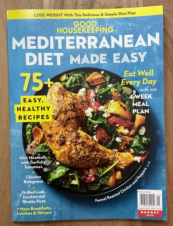 The last time I was in our neighborhood supermarket, I narrowly avoided buying the latest special issue of Good Housekeeping, full of recipes for the Mediterranean diet. Although I was tempted, $13.99 was non-trivial, and I reminded myself that if I want to eat something new, I could always unpack more of my mom’s cookbook collection.



 I discovered that I’m pretty good at the beginning of the game, but by the mid-game I’m falling behind. Why is that? I’m pretty sure it’s because I’m too slow to trade in my weaker characters when more powerful ones become available. If I’ve invested a lot of spells in my “Trojan Donkey,” for example, I’m reluctant to part with him.
 At our post office, there’s a main parking lot, then there’s a special lane where cars can pull up next to a set of mailboxes and you can reach out the window and put your letters into the box. This special lane has right of way over the parking lot exit – if you’re leaving the lot, there’s a stop sign for you. And one day, when I was dropping off my mail, Arnold was leaving the parking lot and ran right through the stop sign.
